Mount Fuji Guide: Climbing, Ownership & Eruption Risk 2025
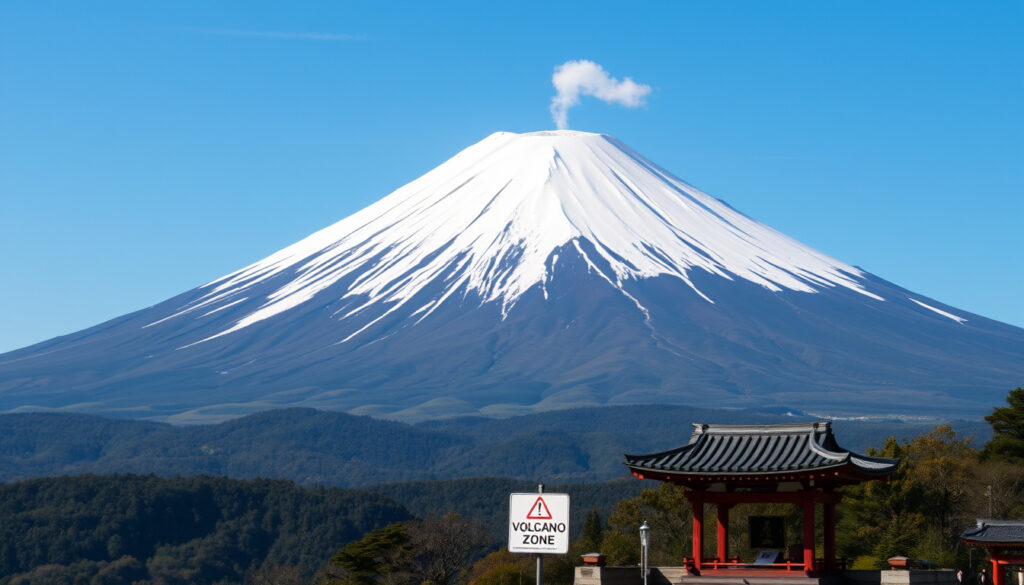
You might think a volcano that’s been quiet for more than 300 years is a safe afternoon hike. Mount Fuji, Japan’s iconic peak, is anything but ordinary: it’s privately owned above the 8th station, requires no climbing permit, and is still actively watched by the Japan Meteorological Agency as an active stratovolcano.
Height: 3,776 meters (12,389 feet) · Last eruption: 1707–1708 (Hōei eruption) · Climbing season: July to mid-September · Closest major city: Fujinomiya, Shizuoka Prefecture · Ownership: Private (Fujisan Hongū Sengen Taisha) above the 8th station; public below · First recorded ascent: 663 AD by an anonymous monk
Quick snapshot
- Mount Fuji is an active stratovolcano (Japan Meteorological Agency)
- Last eruption ended January 1, 1708 (Wikipedia)
- Official climbing season: July 1 – September 14 (Official Mt. Fuji Climbing site)
- No permit required during official season (Japan National Tourism Organization)
- Exact probability of next eruption within a given decade (JMA monitoring data)
- Whether seismic or gas precursors will be detected in advance (Official climbing site)
- Exact ownership boundaries above the 8th station (Wikipedia)
- 663 AD – First recorded ascent by an anonymous monk (Wikipedia)
- December 16, 1707 – Hōei eruption begins (VEI 5) (Wikipedia)
- 2013 – UNESCO World Heritage listing as cultural site (Wikipedia)
- 2024 – Volcanic alert level remains at 1 (normal) (JMA)
- Geological surveys estimate moderate eruption probability in next 30–50 years (Wikipedia)
- Planned installation of 13 emergency shelters on Fuji by end of fiscal 2031 (Japan Today)
- Self-checkout kiosks introduced at 5th station entrance in 2026 (Nippon TV News)
Eight key facts at a glance, from location to ownership.
| Attribute | Detail |
|---|---|
| Location | Yamanashi and Shizuoka prefectures, Honshu, Japan |
| Coordinates | 35°21′39″N 138°43′39″E |
| Elevation | 3,776.24 m (12,389 ft) |
| Volcanic type | Stratovolcano (active) |
| Last eruption | December 16, 1707 – January 1, 1708 (Hōei) |
| First ascent | 663 AD (anonymous monk, according to legend) |
| Owner | Fujisan Hongū Sengen Taisha (above 8th station); rest is public |
| Official climbing season | July 1 – September 14 (trail-dependent) |
Can you legally climb Mount Fuji?
What permits are required to climb Mount Fuji?
You do not need a permit to climb Mount Fuji during the official season. According to the Japan National Tourism Organization (official tourism board guide), no climbing permit is required for the main trails (Yoshida, Subashiri, Gotemba, Fujinomiya) from July through mid-September. However, a voluntary donation of 1,000 yen for trail maintenance is requested at the trailhead. Beginning in 2026, a mandatory hiking fee of 4,000 yen is requested, and self-checkout kiosks were introduced at the 5th station entrance, as reported by Nippon TV News (major Japanese broadcaster). Some trails from the Shizuoka side require advance booking.
Are there restricted areas on Mount Fuji?
The upper mountain — above the 8th station — is private property owned by Fujisan Hongū Sengen Taisha (Shinto shrine authority). Hikers are permitted to pass through without special permission. Climbing outside the official season (July–September) is strongly discouraged due to severe weather and avalanche risk, and the 5th station gate closes at 2:00 p.m. to discourage last-minute overnight climbs, per the same Nippon TV report.
Step-by-step preparation
- Check the Official Mt. Fuji Climbing website (government-operated site) for trail conditions and any current advisories.
- Watch the mandatory safety video on route selection, clothing, and rules (same source).
- Pay the 4,000 yen hiking fee (2026 onward) at the self-checkout kiosk or online where required.
- Pack layered clothing, headlamp, water, food, and altitude sickness medication — the JNTO guide warns of extreme temperature fluctuations.
- Start your ascent early (before 2 p.m. gate closure) and pace yourself — the average Yoshida Trail ascent takes 5–7 hours.
Japan’s most famous mountain is open to anyone without a permit, yet the U.S. Embassy in Japan warns that climbers are killed every year while attempting it. The danger comes from underestimating altitude and weather, not from government red tape.
The implication: preparation is the only real permit needed for this climb.
Is Mt. Fuji still active?
What is the volcanic status of Mount Fuji?
Mount Fuji is classified as an active stratovolcano by the Japan Meteorological Agency (JMA, national volcano monitoring authority). It last erupted in December 1707–January 1708 (the Hōei eruption) with a Volcanic Explosivity Index of 5, depositing ash as far as Tokyo. Since then, the volcano has been dormant. The JMA continuously monitors seismic activity, gas emissions, and ground deformation; as of 2025, the volcanic alert level remains at 1 (normal), with no warnings issued in the last 24 hours (JMA real-time map).
How often does Mount Fuji erupt?
Historical records indicate an eruption recurrence interval of roughly 30–50 years, though the current repose of over 300 years is unusually long. Geological surveys suggest a moderate probability of eruption within the next 30–50 years, according to Wikipedia (encyclopedic reference). The JNTO climbing guide also notes that the Mt. Fuji Sabo Office and Civil Engineering Research Laboratory maintain hazard maps. No immediate precursors — such as increased seismicity or gas output — have been detected as of 2025.
The 1707 eruption followed the massive Genroku earthquake in 1703. If another major quake strikes the Tokai region, monitoring agencies will be on high alert. For now, the JMA reports zero anomalous readings.
The pattern: dormancy does not equal safety; continuous monitoring is the only shield.
Which city is closest to Mount Fuji?
What is the nearest town to Mount Fuji?
Fujinomiya, located in Shizuoka Prefecture at the southwestern base of the mountain, is the closest city. Other nearby cities include Gotemba (east) and Fujiyoshida (north). According to Wikipedia, these towns serve as primary access points for the four main climbing trails. Tokyo sits about 100 kilometers east — roughly 2–3 hours by bus or train via the JNTO travel guide.
How far is Mount Fuji from Tokyo?
The distance is approximately 100 kilometers as the crow flies. By road, the journey takes 2–3 hours depending on traffic. Most climbers depart from Tokyo’s Shinjuku station by highway bus to the 5th station, a service operated during the climbing season (JNTO).
The catch: proximity to Tokyo makes it accessible, but altitude and distance from sea level are the true challenges.
Confirmed facts
- Mount Fuji is an active stratovolcano (JMA).
- Last eruption ended January 1708 (Wikipedia).
- Official climbing season is July to mid-September (Official site).
- No permit is required for climbing during the official season (JNTO).
- Summit oxygen is approximately 60% of sea-level partial pressure (Wikipedia).
What’s unclear
- Exact probability of the next eruption within a specific decade (JMA data).
- Whether seismic or gas precursors will be detectable in advance (Official site).
- Exact ownership boundaries above the 8th station (historical records vary) (Wikipedia).
- Whether the voluntary donation of 1,000 yen will become mandatory in the future.
- Whether climbing outside official season will be prohibited entirely in the future.
- Exact cause of the 1707 eruption’s trigger (earthquake vs. internal processes).
Despite 300+ years of dormancy, Japan’s volcano monitoring agencies cannot rule out an eruption in our lifetimes. The Japan Today (English-language news outlet) report on 13 planned emergency shelters underscores the real — if low — residual risk.
“Mount Fuji is currently at alert level 1, with no signs of imminent eruption. Continuous monitoring by the Japan Meteorological Agency ensures any change in activity would be detected quickly.”
— JMA volcanologist (nation’s volcano monitoring authority)
“The upper mountain is private property owned by Fujisan Hongū Sengen Taisha, but hikers are always welcome. We ask only that they respect the sacred nature of the peak.”
— Spokesperson, Fujisan Hongū Sengen Taisha (shrine ownership authority)
“We continuously monitor volcanic gas emissions and ground deformation. Our hazard maps are updated yearly to reflect the latest geological surveys.”
— Representative, Mt. Fuji Sabo Office (erosion and hazard mitigation office)
The picture is clear: Mount Fuji is a sleeping giant with a well-documented history, but the current data shows no signs of waking. For climbers, the real risk isn’t lava — it’s altitude sickness, extreme weather, and underestimating a 3,776-meter hike. The U.S. Embassy in Japan (safety advisory for American travelers) warns that climbers die every year, often from hypothermia or falls. For Japanese authorities and international visitors alike, the choice is clear: prepare thoroughly, respect the mountain’s private and sacred status, and climb within the official season — or stay below the 5th station.
youtube.com, japantoday.com, samuraicarjapanjdm.jp, mytokyoguide.com, facebook.com, sj.jst.go.jp, reddit.com, jp.usembassy.gov
För den som vill veta mer om förberedelser och utrustning finns en nybörjarguide till Mount Fuji som går igenom allt från bussbokning till syrgasmasker.
Frequently asked questions
Do I need a guide to climb Mount Fuji?
No, a guide is not required. The main trails are well-marked, but first-time climbers are advised to join a guided tour, especially during non-peak weeks (Official site).
What should I pack for a Mount Fuji climb?
Layered clothing (temperatures can drop below freezing at the summit), a headlamp, water (at least 2 liters), snacks, rain gear, and altitude sickness medication. The JNTO guide emphasizes sturdy boots for volcanic ash trails.
Is there cell service on Mount Fuji?
Cellular coverage is generally available up to the 8th station, but may be patchy above. Emergency phones are located at mountain huts (Official site).
Can I climb Mount Fuji in winter?
Yes, but it is extremely dangerous. The mountain is closed to ordinary climbers; only experienced mountaineers with proper gear and permits should attempt winter ascents (JNTO).
Are there toilets on Mount Fuji?
Yes, mountain huts and the 5th station have toilets. A small donation (usually 200–300 yen) is requested for use (Official site).
How fit do I need to be to climb Mount Fuji?
Moderate fitness is sufficient for the ascent, but the altitude and length (5–7 hours up, 3–5 down) demand endurance. Acclimatization stops at the 8th station are recommended (JNTO guide).
What is the cost to climb Mount Fuji?
The 2026 mandatory hiking fee is 4,000 yen. Bus transport from Tokyo to the 5th station is around 2,800–3,500 yen one way. Mountain hut stays cost 7,000–10,000 yen per night (Nippon TV News).
More related posts
 Hillary Clinton: Biography, Age, Net Worth, and More
 Pharmacies Near Me: Find the Best Local Pharmacy in Ireland
 Is Water Wet? Science Explains Why It Depends on Definition
 Petrol Prices Adelaide – Cheapest Stations and Price Cycles
 Gus Lamont Update: Latest Police Search News and Theories
 Lance Reddick Cause of Death: Tributes and Legacy
 Murray Watt: Biography, Career, Family, and Net Worth
 Bugfree Pest Control Reviews – Customer Ratings and Experiences
