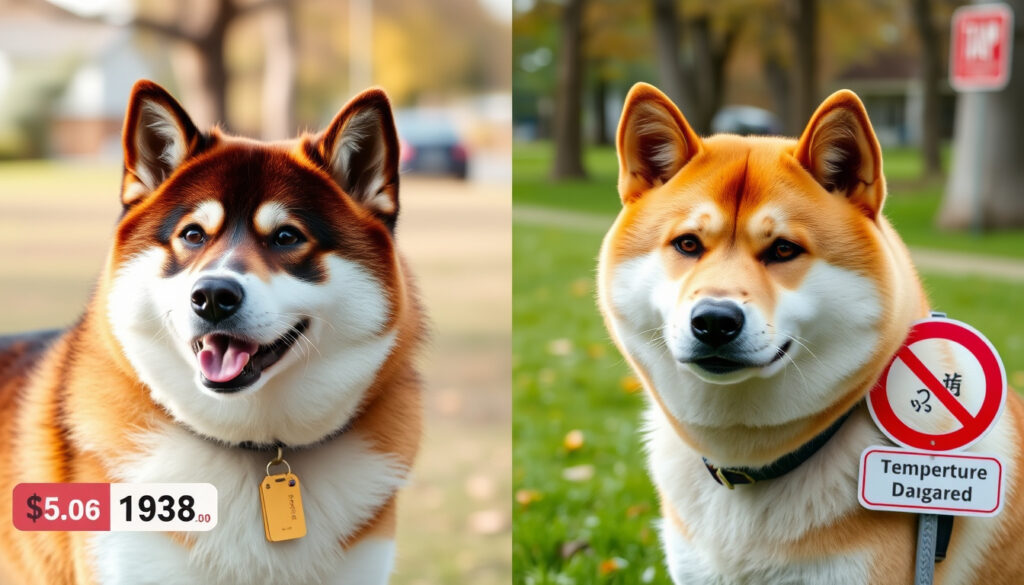
Akita Dog: Temperament, Bans, Price, Shiba Inu Comparison
Anyone considering an Akita quickly discovers that this ancient Japanese breed comes with a reputation that precedes it — loyal to its core, but not without complications. This guide unpacks the temperament, legal landscape, and practical realities of living with an Akita, drawing on veterinary sources and breed experts to help you decide if this powerful dog is right for you.
Height: 24-28 inches (61-71 cm) ·
Weight: 70-130 lbs (32-59 kg) ·
Life Expectancy: 10-15 years ·
Origin: Japan ·
Temperament: Loyal, Dignified, Alert ·
Coat: Double coat, various colors
Quick snapshot
- Akitas originate from Japan (Pedigree UK (dog breed guide))
- Double coat, multiple colors including white, red, brindle, sesame (Pedigree UK)
- Known for dog-directed aggression (The Akita Life (breed experience blog))
- Breed-specific legislation exists in various regions (JAWT (UK-based breed advocacy))
- Whether Japanese and American Akitas are distinct breeds or one breed with variations (The Akita Life)
- Exact historical lineage before the 1600s (The Akita Life)
- 1600s: Breed developed in Northern Japan (Pedigree UK)
- 2020: Japanese and American types increasingly treated as separate breeds in some registries (The Akita Life)
- More cities considering breed-specific legislation (JAWT)
- Owner education is key to reducing rehoming rates (Pedigree UK)
| Attribute | Value |
|---|---|
| Breed Group | Working / Non-Sporting (depending on registry) |
| Height | 24-28 inches |
| Weight | 70-130 lbs |
| Lifespan | 10-15 years |
| Coat | Double coat, medium length |
| Colors | White, red, brindle, sesame, black and white |
| Origin | Japan |
How aggressive is an Akita?
The Akita’s reputation for aggression is both earned and exaggerated. The breed was developed in 17th-century Japan for hunting bear and guarding property — instincts that still surface in modern dogs.
Are Akitas aggressive to humans?
- Pedigree UK describes Akitas as “affectionate family pets” that form strong bonds, but notes they can be “aloof with unfamiliar people.” (Pedigree UK (veterinary-backed breed guide))
- JAWT, a UK-based breed advocacy site, says Akitas are not typically human-aggressive but can be protective. (JAWT (breed behaviour resource))
- Early socialisation and consistent training reduce the risk of human-directed aggression, according to Akita Life YouTube discussions. (The Akita Life (YouTube channel))
Akitas are fiercely loyal to their family yet guarded with strangers — a combination that makes them excellent watchdogs but challenging family dogs for the inexperienced.
Are Akitas high risk dogs?
Risk depends on context. Insurance companies and rental housing providers often class Akitas as high-risk because of dog-directed aggression and bite statistics. Pedigree UK states that Akitas “can be aggressive with other dogs, especially dogs of the same sex.” (Pedigree UK) The breed’s size and strength amplify any incident.
Pet food advice from Black Hawk Dog Food Review highlights the importance of proper nutrition for managing energy levels and behaviour in large working breeds.
The implication: an Akita is not inherently dangerous, but the owner must be proactive about training, supervision, and understanding canine body language.
Why are Akitas banned?
Akitas appear on breed-restricted lists in many jurisdictions, not because they are the most aggressive breed, but because their size, strength, and dog‑directed aggression create liability concerns.
What is the no. 1 aggressive dog breed?
No single breed consistently ranks number one in aggression studies — methodology varies widely. However, Akitas frequently appear in the top five for dog‑directed aggression. JAWT explains that “breed-specific legislation (BSL) often targets Akitas alongside Pit Bulls, Rottweilers, and Dobermans.” (JAWT)
- In the UK, the Dangerous Dogs Act does not list Akitas, but many landlords and insurers impose their own restrictions. (JAWT)
- In Ireland, Akitas are among breeds that require special insurance and housing permissions. (Husky Rescue Ireland (dog charity))
- Several US cities — including Denver and Miami — have banned or restricted Akitas under municipal BSL. (The Akita Life)
Banning does not reduce bites — it pushes responsible owners underground and leaves poorly bred Akitas in the hands of owners who ignore the law. Education and enforcement of existing leash and containment laws are more effective, but politically harder.
Why this matters: anyone considering an Akita must first check local regulations and insurance policies. A banned dog cannot be kept legally — no matter how well trained.
Is the Akita a good family dog?
Yes — with significant caveats. The breed’s loyalty and protectiveness can make it an outstanding family companion, but only for the right household.
What to consider before getting an Akita
- PDSA (People’s Dispensary for Sick Animals) states: “Akitas are known for being incredibly loyal family pets.” (PDSA (UK veterinary charity))
- Royal Canin’s breed description notes: “Akitas are very appreciative of company yet fiercely independent and calm.” (Royal Canin (pet nutrition brand))
- Akitas can be good with children if raised together, but supervision is necessary due to the dog’s size and prey drive. (Pedigree UK)
- First-time owners are generally not recommended. The breed’s independence and stubbornness require an experienced handler. (JAWT)
Upsides
- Extremely loyal and protective of family
- Quiet indoors — not a barker
- Strong bond with owners who train consistently
Downsides
- Dog-directed aggression, especially same sex
- High prey drive — not safe around small pets
- Requires firm, consistent training from an experienced owner
The trade-off: you get a devoted guardian, but you must accept that walks, dog parks, and multi‑dog households will need careful management.
What are the differences between Japanese and American Akitas?
Breed enthusiasts often argue over whether the Japanese Akita (Akita Inu) and the American Akita are the same breed. In practice, the two types differ in appearance, temperament approval, and kennel club recognition.
Akita dog Japanese vs American
- The Japanese Akita is more fox-like, with a lighter bone structure, a finer coat, and a more reserved temperament. (The Akita Life (YouTube))
- The American Akita is heavier, more robust, and comes in many colours including black and white and solid white. (The Akita Life)
- American Akitas can weigh up to 130 lbs, while Japanese Akitas typically stay under 90 lbs. (Pedigree UK)
- Some kennel clubs (e.g., FCI) recognise them as separate breeds; the AKC treats them as one breed with two varieties. (JAWT)
Akita dog white and black and white
The American Akita standard allows all coat colours including pure white, black and white, and brindle. The Japanese Akita standard only permits red, sesame, brindle, and white — no pinto or black‑and‑white patterns are accepted in Japan. (The Akita Life)
Akita size
Males generally stand 26-28 inches at the shoulder and weigh between 100-130 lbs for American lines; Japanese Akitas are smaller, with males at 24-26 inches and 70-90 lbs. (Pedigree UK)
The pattern: buyers who assume all Akitas are identical risk choosing a type that does not fit their environment.
How does the Akita compare to the Shiba Inu?
Three key dimensions, one pattern: both are independent Japanese breeds, but the size and drive differences are enormous.
| Trait | Akita | Shiba Inu |
|---|---|---|
| Weight | 70-130 lbs | 20-30 lbs |
| Height | 24-28 in | 13.5-16.5 in |
| Temperament | Protective, reserved with strangers | Independent, cat-like, aloof |
| Dog aggression | High, especially same sex | Moderate, but can be selective |
| Trainability | Intelligent but stubborn | Intelligent but notoriously hard to train |
| Exercise needs | High | Moderate |
| Good for first-time owners? | No | Not recommended |
The Shiba is smaller, more independent, and less dog-aggressive on average, but both breeds require firm, consistent training and are not “off‑leash” dogs. (Pedigree UK)
The implication: if space or strength is a concern, the Shiba Inu may be a more manageable alternative, though still demanding.
“Akitas are known for being incredibly loyal family pets.” — PDSA (veterinary charity)
“Akitas are very appreciative of company yet fiercely independent and calm.” — Royal Canin (breed library)
“They will become a loyal family member who can be aggressive towards other dogs.” — Husky Rescue Ireland (dog charity)
Clarity: What we know and what’s uncertain
Confirmed facts
- Akitas originate from Japan and were used for hunting and guarding
- They have a double coat and come in multiple colours
- They are known for dog-directed aggression
- Breed-specific legislation exists in various regions
What’s unclear
- Whether Japanese and American Akitas are distinct breeds or one breed with variations (debated among kennel clubs)
- Exact historical lineage before the 1600s
- The exact year the Japanese government designated the Akita a natural monument (often cited as 1931, but source not verified)
- The exact year the American Akita was recognized by the AKC (often cited as 1972, but source not verified)
- Whether growing demand for Akitas will lead to an increase in irresponsible breeding (no direct source yet)
The pattern: much of what we “know” about Akita temperament comes from owner reports rather than controlled studies. The breed’s popularity on social media also skews perception — calm Akitas don’t make clickbait videos.
While the Japanese Akita Inu is a distinct breed, those interested in the larger, more robust version can read an American Akita overview for a detailed comparison.
Frequently asked questions
Do Akitas shed a lot?
Yes. Akitas have a thick double coat that sheds heavily year-round, with a massive seasonal blowout twice a year. Weekly brushing is essential, and daily brushing during shedding season helps manage the fur.
Pedigree UK (coat care guide)
Are Akitas good with other dogs?
Generally, no. Pedigree UK and The Akita Life both state that Akitas are prone to same‑sex aggression and may not tolerate other dogs, especially of the same sex.
The Akita Life
How much exercise does an Akita need?
Akitas need at least an hour of vigorous exercise daily — walking, jogging, or hiking. They also enjoy mental stimulation through training and puzzle toys.
PDSA
What health problems are common in Akitas?
Common issues include hip dysplasia, hypothyroidism, progressive retinal atrophy, and gastric dilatation‑volvulus (bloat). Regular vet checkups are crucial.
Royal Canin breed library
Is an Akita easy to train?
Akitas are intelligent but independent and stubborn. Training requires patience, consistency, and positive reinforcement. First-time owners often struggle.
JAWT
What is the history of the Akita breed?
The breed was developed in the mountainous Akita Prefecture of Japan during the 1600s. It was used for hunting bear and boar and later became a symbol of good health and happiness. After World War II, the breed nearly went extinct but was revived by dedicated breeders.
Pedigree UK
How much does an Akita cost per year to maintain?
Annual costs include food, veterinary care, grooming, training classes, and insurance. Expect $2,000–$3,500 per year for a healthy Akita in the UK or US.
PDSA
What movie features an Akita dog?
The 2009 film “Hachi: A Dog’s Tale” starring Richard Gere features an Akita named Hachiko, based on the true story of a loyal Akita who waited for his owner at a train station in Japan.
Wikipedia (Hachiko article)
Can dogs eat oranges?
Yes, oranges are safe for dogs in small quantities. However, consult your vet before offering new treats, especially for Akitas prone to dietary sensitivities.
Can Dogs Eat Oranges guide
For anyone in the UK or US researching an Akita, the decision is clear: commit to an experienced trainer, check your local housing and insurance policies, and ensure you have the time and space for a large, independent dog — or choose a breed with a lower risk profile.
More related posts
 Brook Crompton Now: MAFS, Pregnancy, Model Updates 2026
 Maccas Breakfast Time: Hours for UK, Ireland & Australia
 Rent Assistance Centrelink: Rates, Eligibility & Apply 2026
 Liverpool F.C. vs Everton F.C. Timeline: Key Moments & Results
 Skin Cancer Check in Ireland: Signs, Costs & Referral Guide
 Sam Mitchell Guide: EastEnders, Football Coach & Sports Dad
 Allianz Landlord Insurance Ireland: Quotes & Cover
 Sergey Brin: Bio, Net Worth, Religion, Politics, Relationships
