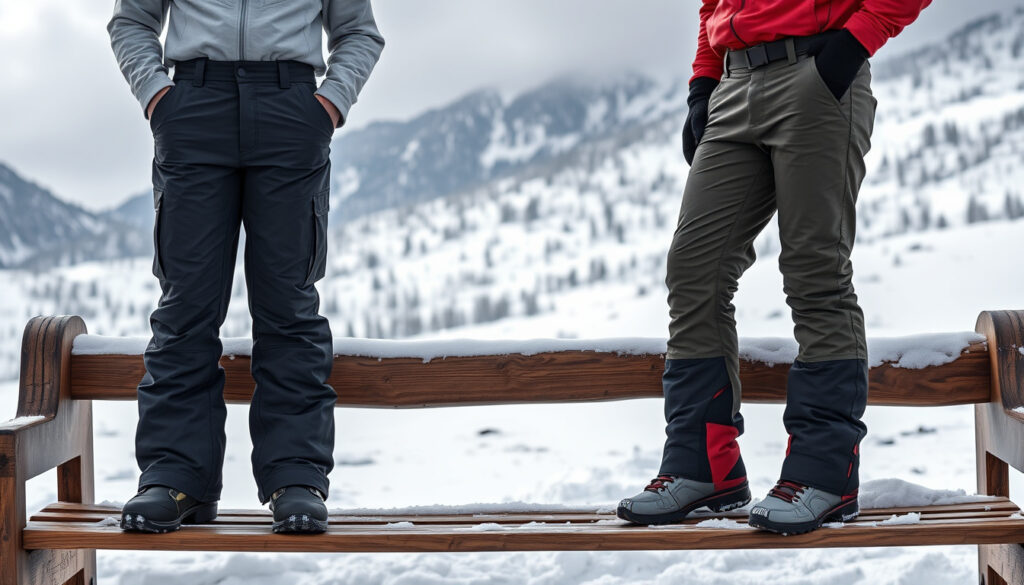
Snow Pants vs Ski Pants: Fit, Layering, and Key Differences
Anyone who has shivered through a lift ride or sweated through a powder run knows that your choice of snow pants isn’t just about style. According to Columbia Sportswear, ski and snowboard pants are often functionally similar, but the fit and features can change how you move and how warm you stay.
Typical waterproof rating: 5,000–20,000 mm ·
Common insulation weight: 40–200 g ·
Average price range: $100–$300 ·
Key fabric technologies: Gore‑Tex, DWR, Omni‑Tech
Quick snapshot
- Snow pants are designed to be worn over a base layer (Quiksilver expert guide)
- Ski pants are generally more fitted than snowboard pants (Columbia Sportswear)
- Waterproof ratings of 10,000 mm or higher are recommended for heavy snow (Orage Outerwear)
- Whether baggy or fitted is better for beginners depends on the activity (skiing vs snowboarding) (Quiksilver)
- The ideal insulation weight varies greatly with personal cold tolerance and exertion level (Orage Outerwear)
- Snowboard pants may be longer in length than ski pants, but sizing differences are not standardized (Quiksilver)
- Recommended minimum waterproof rating: 10,000 mm (Orage Outerwear)
- Recommended breathability: ~10,000 g/m²/24h for moderate activity (Orage Outerwear)
- Insulated vs shell choice driven by activity type, not season (Evo guide)
The following table summarizes the key specifications to consider.
| Waterproof rating | 5,000–20,000 mm |
| Insulation weight | 40–200 g |
| Average price | $100–$300 |
| Common brands | Columbia, The North Face, Patagonia, Arc’teryx |
| Fabric technologies | Gore‑Tex, DWR, Omni‑Tech |
What is the difference between snow pants and ski pants?
The short answer: the line between them has blurred. As Columbia Sportswear explains, many brands treat ski and snowboard pants as functionally similar, with differences limited to style and fit. Still, those fit differences affect performance. Ski pants are usually slimmer, with reinforced ankles to resist boot buckles and ski edges (Quiksilver). Snowboard pants are often looser, longer, and reinforced at the knees and seat — common impact points for boarders.
Key design differences: fit, insulation, and features
- Fit: Ski pants fit closer to the body; snowboard pants are roomier for crouching and twisting (Columbia Sportswear).
- Insulation vs shell: Both types come as insulated or shell; there is no standard rule per activity (Quiksilver).
- Ventilation: Snowboard pants tend to have more and larger vents to dump heat during intense runs.
- Reinforcements: Ski pants protect ankles; snowboard pants protect knees and seat (Quiksilver).
Six key differences, one pattern: your choice should be driven by your movement style, not the name on the tag.
| Feature | Ski pants | Snowboard pants |
|---|---|---|
| Fit | Tailored, slim | Relaxed, baggy |
| Reinforced areas | Ankles, cuffs | Knees, seat |
| Vent options | Moderate | Extra vents, often zippered |
| Length | Standard inseam | Often longer to cover boots over board stance |
| Stretch fabric | Common for mobility | Less common, but available |
| Powder skirt | Often integrated | Less common, but bibs provide similar coverage |
The implication: if you ski, prioritize a fitted pant with ankle reinforcement. If you snowboard, choose a baggier pant with venting and knee padding. The waterproofing and breathability specs are the same for both — focus on the rating, not the label.
Skiers get aerodynamic efficiency and less fabric to snag on chairlifts. Snowboarders get freedom of movement and space for impact shorts. There is no “better” — only better for your sport.
The implication: the differences are real, but the waterproofing and breathability specs are identical. Choose based on movement style, not the label.
Do you need snow pants for skiing?
Yes, for most conditions. Snow pants provide essential warmth, waterproofing, and durability that jeans or untreated pants simply cannot match. As Orage Outerwear states, snow pants should be waterproof and windproof, with a minimum 10,000 mm waterproof rating for serious snow. Alternatives like hiking pants can work on sunny spring days, but wet pants in cold weather can lead to hypothermia.
Upsides
- Guaranteed warmth and waterproofing
- Specifically designed for the slopes: reinforced cuffs, powder skirts
- Better durability against falls and edges
- Can be found at all price points, including rentals
Downsides
- More expensive than generic outdoor pants
- Not needed for fair‑weather or walk‑up terrain
- Bulky when off the slopes
- Over‑spec for occasional use
When you can get away with waterproof hiking pants
If you are a beginner on a mild day or skinning up a resort, a pair of waterproof hiking trousers with a baselayer can suffice. But Evo warns that dedicated snow pants offer better cut for boots and movement. For resort skiers, the added features are worth it.
The pattern: dedicated snow pants are an investment in safety and comfort. For occasional use, shell pants with proper layering give you flexibility without spending on insulation you may not need.
What are really good snow pants?
The best snow pants combine high waterproofing, smart ventilation, and a fit that matches your activity. Reputable brands include Columbia, The North Face, Patagonia, and Arc’teryx. According to Evo’s guide, focus first on the waterproof rating (aim for 10k–20k), then on seam taping and adjustable waists.
A 10,000 mm rating will keep you dry in powder; 15,000–20,000 mm is what Orage recommends for wet snow. Breathability of 10,000 g/m²/24h or higher prevents sweat buildup during active runs.
Top brand recommendations and what to look for
- Columbia: Omni‑Tech waterproofing, affordable, wide range of fits.
- The North Face: Futuristic shell technologies, great for layering.
- Patagonia: Focus on sustainability and shell‑based layering systems.
- Arc’teryx: Premium Gore‑Tex shells, highly breathable, precise fit.
The implication: check reviews on Outdoor Gear Lab and REI for independent testing of durability and warmth.
Are snow pants meant to be baggy?
Not always — it depends on whether you ski or snowboard. Snowboard pants are traditionally baggy to allow freedom of movement and extra layering, as Columbia notes. Ski pants are more fitted to reduce wind resistance and improve aerodynamics. But overly baggy pants can get caught on chairlifts or edges, posing a safety risk.
Fit differences between snowboard and ski pants
- Snowboard: relaxed cut, enough room for knee pads and impact shorts.
- Ski: tailored, stretch fabric common to allow dynamic movement.
How baggy is too baggy for safety?
The cuffs should cover your boot tops without dragging on the ground. Excess fabric around the ankles can catch on a chairlift. Orage recommends choosing a length that covers boots without dragging. If you can step into a binding without your pant leg puddling, you’re in the right range.
What this means: for skiers, avoid baggy; for snowboarders, baggy is fine as long as it stays clear of your gear. The common rule: enough room for a base and mid layer, no more.
Do you wear pants under snow pants?
Yes — snow pants are designed to be worn over a base layer. The ideal system, as outlined by Quiksilver, is a base layer (thermal leggings), optional mid layer (fleece or down pants), and a shell or insulated snow pant as the outer layer. Avoid cotton; use wool or synthetics for moisture management.
What is the warmest thing to wear under snow pants?
For extreme cold, add an insulated mid layer like fleece or down pants. Evo notes that a 200‑weight fleece or lightweight down pants can boost warmth without restricting movement.
What to wear under ski pants: base and mid layer recommendations
- Base: Merino wool (150–200 g/m²) or synthetic thermal.
- Mid: Fleece (100–200 g) or lightweight down pants for extreme cold.
- Outer: Shell snow pants with 10k–20k waterproofing.
The catch: too much insulation in the pant itself can make you overheat during active runs. Shell pants with layered insulation give you the flexibility to adjust.
“Ski and snowboard pants are often functionally similar, with differences limited to style and fit, not core performance.”
“Snow pants should have at least a 10,000 mm waterproof rating. For wet snow, 15,000–20,000 mm is appropriate.”
For those new to winter sports, the choice is clear: buy a pair of dedicated snow pants that match your preferred activity. A skier needs a slim fit with ankle protection; a snowboarder needs baggy pants with knee padding. Either way, pair them with a moisture‑wicking base layer and a breathable shell, and you’ll stay warm, dry, and safe all season.
stio.com, publiclands.com, eriksbikeshop.com, youtube.com, 686.com, outdoorgearlab.com, montecwear.com, reddit.com
For a more detailed breakdown of fit and layering, check out this snow pants vs ski pants guide.
Frequently asked questions
Can I use rain pants instead of snow pants?
Rain pants lack insulation and are not designed for cold temperatures. They may work over heavy layers for short periods, but snow pants offer better warmth, breathability, and durability for the slopes.
Do snow pants come in different lengths?
Yes, many brands offer short, regular, and long inseams. Check the sizing chart and measure your inseam before buying. Online retailers like REI list inseam lengths for most models.
How should I wash snow pants?
Follow the care label: typically machine wash cold on gentle, use a tech wash detergent, and tumble dry low. Avoid fabric softeners. Reapply DWR coating after a few washes if water stops beading.
Are snow pants necessary for children?
Yes — children lose heat faster and are more likely to sit in the snow. Insulated snow pants with reinforced knees are a must for safety and comfort.
What is the difference between insulated and shell snow pants?
Insulated pants have built‑in padding (40–200 g) for cold days. Shells have no insulation and rely on layers for warmth — they are lighter and more versatile for varying conditions.
How do I know my snow pants size?
Measure your waist, hips, and inseam. Consult the brand’s size chart. Consider the fit you want: slim for skiing, relaxed for snowboarding. If between sizes, size up for layering room.
More related posts
 Akita Dog: Temperament, Bans, Price, Shiba Inu Comparison
 Jules Bianchi: His Tragic Crash and the F1 Safety Revolution
 Animal Jam Guide: Playability, Safety, Rarest Items
 The Langham Sydney – Boutique Luxury Near Opera House
 Richard Gere: Biography, Marriages, Children & Health Facts
 Heart Rate Zones – Chart, Calculator and Training Guide
 Brigitte Bardot Dead at 91: Estranged Son, Lovers, Legacy
 Chris Bath: Where She Lives, Farm, and Career Updates
