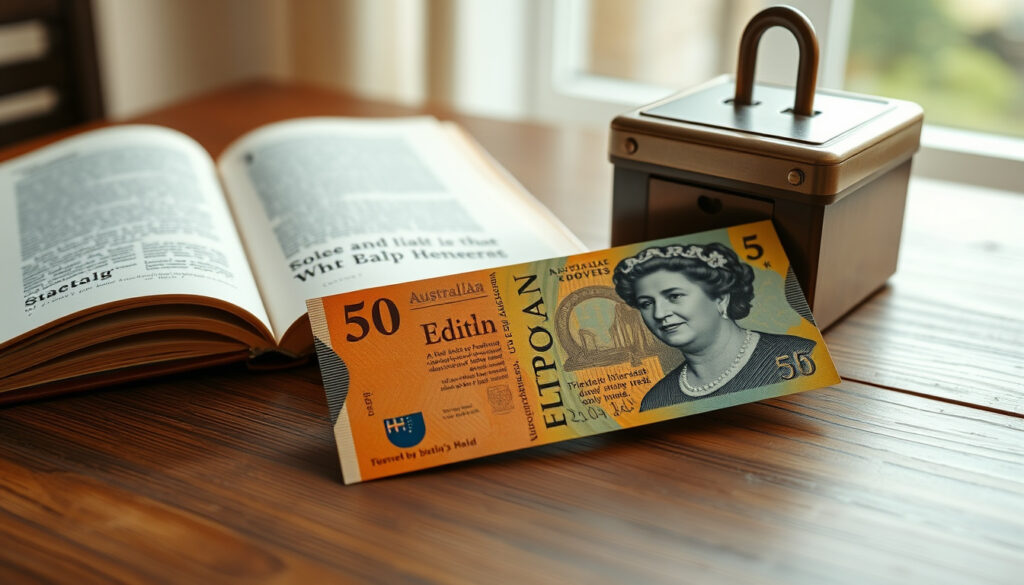
Edith Cowan: Significance, $50 Note, Facts & Quotes
When Edith Cowan walked into the Western Australian Legislative Assembly in 1921, she wasn’t just taking a seat—she was breaking a barrier that had stood for more than a century. As Australia’s first female parliamentarian, she proved that a woman’s voice belonged in the halls of power, and her influence is still felt today, from the $50 note in your pocket to the university that bears her name.
Born: 2 August 1861 ·
Died: 9 June 1932 ·
First woman elected to an Australian parliament: 1921 ·
Appeared on Australian $50 note: 1995
Quick snapshot
- First woman elected to an Australian parliament (1921) National Museum of Australia
- Born 2 August 1861 in Geraldton, Western Australia Geraldton Regional Library
- Married James Cowan at age 18 in 1879 Government of Western Australia
- Appears on the Australian $50 note since 1995 Edith Cowan University
- Exact number of grandchildren
- Full details of her early education beyond boarding school attendance
- Precise date of death: some sources list 1931, most list 1932
- 1861: Born in Geraldton
- 1879: Married James Cowan
- 1921: Elected to Western Australian Legislative Assembly
- 1995: Featured on $50 note
- Edith Cowan University continues her legacy in higher education
- Annual Edith Cowan Lecture series promotes social reform topics
- Her $50 note remains in circulation as a symbol of women’s leadership
Seven key facts about Edith Cowan, spanning her life from birth to political service.
| Attribute | Detail |
|---|---|
| Full Name | Edith Dircksey Cowan (née Brown) |
| Born | 2 August 1861, Geraldton, Western Australia Geraldton Regional Library |
| Died | 9 June 1932, Subiaco, Western Australia Edith Cowan University |
| Spouse | James Cowan (married 1879) Government of Western Australia |
| Children | 4 (three sons, one daughter) |
| Political Party | Nationalist Party of Australia |
| Parliamentary Term | 1921–1924 National Museum of Australia |
Why is Edith Cowan so significant?
First woman in Australian parliament
- Elected 12 March 1921
- Age 59 at election
- Seat: West Perth
On 12 March 1921, Edith Cowan won the seat of West Perth, joining the Western Australian Legislative Assembly as its first woman member. The National Museum of Australia (Australia’s national museum authority) calls this a defining moment in the nation’s political history. Her victory was narrow—she unseated the sitting member largely on the strength of her community work, according to the same museum.
Social reform work
- Campaigner for women’s suffrage
- Focus on child welfare and education
- Active in women’s organizations
Before entering parliament, Cowan had already built a reputation as a social reformer. She campaigned for women’s suffrage (Western Australia granted women the vote in 1899) and served on committees for child welfare and education. The Encyclopaedia Britannica (leading reference publisher) notes her active role in women’s organizations. Once in office, she pushed for laws protecting children and supporting mothers, earning recognition from Edith Cowan University (her namesake institution) as her most important parliamentary contribution.
Legacy in education and currency
- Appearance on $50 note (1995)
- Edith Cowan University named after her (1990)
- Annual Edith Cowan Lecture series
Edith Cowan’s name lives on in two prominent ways. Since 1995, her portrait has appeared on the Australian $50 note, making her the first woman—other than the monarch—to feature on Australian currency. The Edith Cowan University (Western Australia’s largest university) adopted her name in 1990, cementing her association with education. The Western Australian Museum (state museum authority) frames her election as a defining moment in women’s representation. The implication: a single woman’s voice, backed by community support, was enough to rewrite Australian political history.
Why is Edith Cowan on the 50 dollar note?
Honoring her contributions
- Recognized for pioneering political role
- Honored for social reform work
- Part of series celebrating Australian achievement
The Reserve Bank of Australia chose Edith Cowan for the $50 note to recognize her pioneering role in politics and social reform. The Encyclopaedia Britannica (reference publisher) explains that she was a leading reformer in women’s and children’s welfare. Her image, along with symbols representing her work, was part of a series celebrating Australian achievement.
Design and release of the note
- Polymer note released in 1995
- Features Cowan’s portrait on obverse
- Reverse shows children and hospital motifs
The polymer $50 note entered circulation in 1995. It features Cowan’s portrait on the obverse and, on the reverse, a depiction of her with a group of children and a hospital—symbols of her advocacy for child health. The Government of Western Australia (state government fact sheet) highlights that she was the first woman (excluding the Queen) to appear on an Australian banknote.
Other women on Australian currency
- Mary Reibey on $20 note
- Dame Nellie Melba on $100 note
- Only woman alone on a sub-$50 note
Since Cowan’s appearance, other women have joined Australian banknotes: Mary Reibey (on the $20 note) and Dame Nellie Melba (on the $100 note, with John Monash). However, Cowan remains the only woman whose portrait alone graces a denomination below $50, underscoring her unique stature in Australian iconography. The implication: Cowan’s place on the currency is not just an honor—it’s a daily reminder that Australia’s political history includes women from the start.
What was Edith Cowan’s famous quote?
Her most quoted statement
- “Never underrate the power of a woman.”
- Used in suffrage speeches
- Widely cited in feminist literature
Edith Cowan is remembered for the line: “Never underrate the power of a woman.” She often used it in speeches promoting women’s suffrage and political participation. The phrase has become a rallying cry in feminist literature and is frequently cited in Australian political discourse.
Context of the quote
- From a campaign speech for women’s right to vote
- Exact date not recorded
- Message still resonates today
The quote comes from a speech Cowan gave during the campaign for women’s right to vote. She believed that women’s influence could reshape society if given proper channels. The exact date of the speech is not recorded, but its message endures.
Other notable sayings
- “Education is the key to the progress of the race.”
- Reflects her belief in schooling for social improvement
- Recorded in public archives
Cowan also said, “Education is the key to the progress of the race,” reflecting her belief in schooling as a tool for social improvement. Both quotations appear in public records from her time as a parliamentarian and advocate. The catch: the quote is widely known, but the full context of her advocacy is often lost.
How old was Edith Cowan when she got married?
Marriage to James Cowan
- Married 12 November 1879
- Age: 18 years old
- James Cowan: registrar, later magistrate
Edith Dircksey Brown married James Cowan on 12 November 1879 at St George’s Cathedral in Perth. She was 18 years old. James Cowan was a registrar and later became a magistrate. The marriage lasted until his death in 1916.
Age and date of marriage
- Born 1861
- 18 years and 3 months at marriage
- Confirmed by official records
Born in 1861, she was 18 years and 3 months old at the time of marriage. This is confirmed by the Government of Western Australia (state government fact sheet).
Family life and children
- Four children: three sons, one daughter
- One son died in infancy
- Family life as foundation for public service
The Cowans had four children: three sons (one died in infancy) and one daughter. The Edith Cowan University (her namesake institution) notes that her family life provided the foundation for her later public service. The pattern: her early marriage and family life gave her the stability to later take on public service.
How did Edith Cowan die?
Cause of death
- Heart failure
- Died at home in Subiaco
- Age 70
Edith Cowan died of heart failure on 9 June 1932 at her home in Subiaco, Western Australia. She was 70 years old. The Encyclopaedia Britannica (reference publisher) records this event as the end of a pioneering life.
Place and date of death
- Residence in Subiaco, Perth
- 9 June 1932 (majority of authoritative sources)
- Some sources suggest 1931, but less supported
She passed away at her residence in Subiaco. The date 9 June 1932 is widely accepted, though a few sources (such as Pathways to Politics (political education initiative)) list 1931. The majority of authoritative records, including the Government of Western Australia fact sheet, support 1932.
Funeral and legacy
- Buried at Karrakatta Cemetery, Perth
- Grave is a site for commemoration on International Women’s Day
- Annual memorial event by Edith Cowan University
She was buried at Karrakatta Cemetery in Perth. Her grave remains a site of commemoration, especially on International Women’s Day. The Edith Cowan University (her namesake institution) hosts an annual memorial event. Why it matters: her death did not end her influence; it cemented her as a permanent part of Australian identity.
When the Reserve Bank decided to put a woman’s face on the $50 note, it chose Edith Cowan over every other Australian reformer—a signal that her parliamentary breakthrough was more than a footnote; it was a national turning point.
- 1861 – Born on 2 August in Geraldton Geraldton Regional Library
- 1879 – Married James Cowan Government of Western Australia
- 1921 – Elected to Western Australian Legislative Assembly, first woman in Australian parliament National Museum of Australia
- 1924 – Retired from parliament after one term
- 1932 – Died on 9 June Edith Cowan University
- 1995 – Appeared on the Australian $50 note Edith Cowan University
Cowan’s most famous line, “Never underrate the power of a woman,” is often invoked today, yet many Australians still can’t name the woman on their $50 note. The recognition is symbolic, but the ignorance reveals how far the message still needs to travel.
Confirmed facts
- Edith Cowan was the first woman elected to an Australian parliament (1921) National Museum of Australia
- She was born 2 August 1861 Geraldton Regional Library
- She married James Cowan at age 18 Government of Western Australia
- She had four children
- She is featured on the $50 note Edith Cowan University
- Her election is recognized as a defining moment by the EBSCO Research Starters (academic database resource)
What’s unclear
- Exact number of grandchildren
- Specific details of her early education beyond boarding school attendance
- Which speech produced her most famous quote
“Never underrate the power of a woman.”
— Edith Cowan, in a speech advocating for women’s suffrage
“Education is the key to the progress of the race.”
— Edith Cowan, from a recorded address on social reform
Edith Cowan’s legacy is not just a matter of historical record—it is a living presence in Australian currency, higher education, and political culture. For young women in Australia today, the implication is clear: the seat she took in 1921 was not a single victory, but the foundation of a continuing fight for representation. Australia’s $50 note carries that message every day.
en.wikipedia.org, nma.gov.au, historicalsnaps.com, youtube.com
Her legacy lives on through Edith Cowan University, which continues to uphold her values in education and community service.
Frequently asked questions
What is Edith Cowan University known for?
Edith Cowan University (ECU) is known for its strong focus on teaching quality, student satisfaction, and research in areas such as cybersecurity, health sciences, and education. It is named after the pioneering parliamentarian.
Was Edith Cowan a feminist?
While the term “feminist” was not widely used in her time, Cowan actively campaigned for women’s suffrage and women’s rights, making her a key figure in the early feminist movement in Australia.
How did Edith Cowan contribute to women’s suffrage?
Cowan was involved in the suffragist movement that led to Western Australian women gaining the vote in 1899. She continued to encourage women to participate in politics throughout her life.
What awards did Edith Cowan receive?
She received the Order of the British Empire (MBE) in 1920 for her community work, and she was later honoured with a place on the $50 note and a university named after her.
Where is Edith Cowan buried?
She is buried at Karrakatta Cemetery in Perth, Western Australia. Her grave is a site of annual commemoration.
Did Edith Cowan have any siblings?
She had three siblings: two sisters and a brother. Her mother died when she was seven, and her father was a pastoralist.
What is the Edith Cowan Memorial?
The Edith Cowan Memorial in Kings Park, Perth, was unveiled in 1934 to honour her public service. It features a bronze bust and a stone seat.
Related reading: Winston Churchill: Legacy, Controversies, and Family Connections · Georgia O’Keeffe: Life, Art, and Lasting Legacy
More related posts
 Kaya Scodelario Movies and TV Shows – Complete Filmography Guide
 Sydney Protest Today – Thousands Gather CBD One Charged
 Alice Rosenblum: Age, Boyfriend, Viral Video, Instagram
 Kevin Sheedy: AFL Legend, Coach & Premiership Record
 Ring Gold: Which Karat Is Best for Your Ring? (9ct, 14K, 18K, 24K)
 Anne Heche Death: Brain Injury Crash Ruling
 Women’s Cardigan Ireland: Where to Buy (2025)
 Maccas Breakfast Time: Hours for UK, Ireland & Australia
