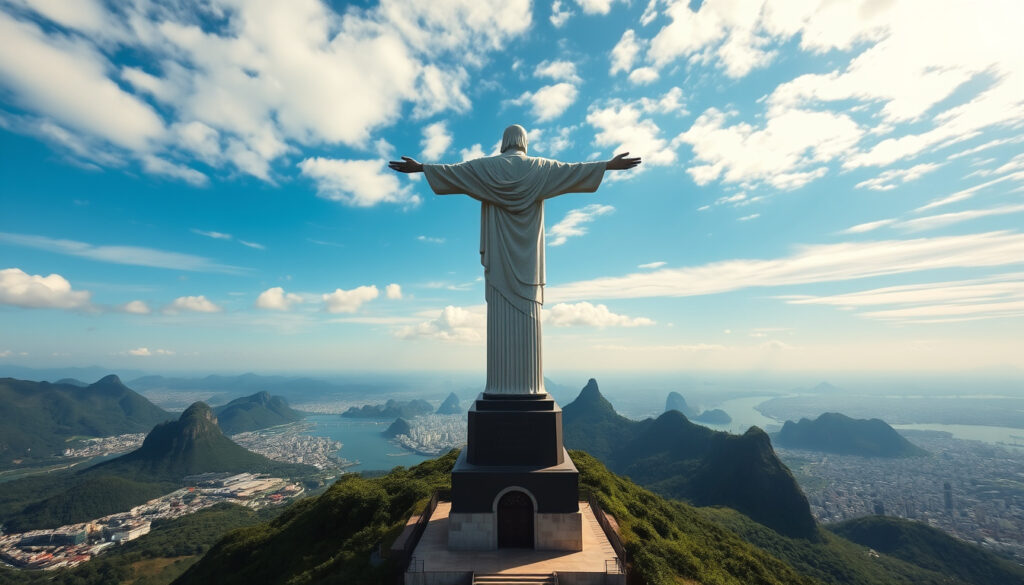
Christ the Redeemer: History, Height, Facts and Visitor Guide
We’ve all seen the postcard-perfect image a thousand times, but standing beneath a 98-foot-tall monument perched on a mountain peak is a different story entirely. If you’re sketching out a Rio itinerary, you’re likely weighing the practicalities—how long the Corcovado train ride takes, when the crowds are thinnest, or why a hefty granite pedestal matters.
Confirmed Facts
- Height including pedestal: 98 feet (30 meters) Encyclopaedia Britannica
- Weight: 635 tons Encyclopaedia Britannica
- Material: Reinforced concrete and soapstone CNN historical context
- Construction period: 1926–1931 Rio Christ the Redeemer Tickets
- Site: Corcovado mountain, Rio de Janeiro, Brazil Encyclopaedia Britannica
- UNESCO: Part of a Rio landscape, not a standalone site Encyclopaedia Britannica
- New7Wonders: Voted in 2007 New7Wonders Foundation
- Represents Jesus Christ, not a historical figure Encyclopaedia Britannica
- Designed as a Christian theological symbol of redemption CNN historical context
- Integrated with the Corcovado mountain landscape Encyclopaedia Britannica
- Architect: Heitor da Silva Costa Encyclopaedia Britannica
- Sculptor: Paul Landowski (French-Polish) Encyclopaedia Britannica
- Structural engineering decision on the concrete core CNN historical context
Height: 98 feet (30 m) · Weight: 635 tons · Completed: 1931 · Wonders vote: 2007
Why is Christ the Redeemer so famous?
Christ the Redeemer, or Cristo Redentor in Portuguese, is not just a colossal statue; it’s a statement etched into the skyline of Rio de Janeiro. The idea for a religious monument on Corcovado mountain dates back to the 1850s, but it only gained serious traction after World War I, when the Catholic Church and Brazilian leaders sought something to combat what they saw as a growing “godlessness” in society. The statue is an artistic depiction, a representation of Jesus Christ as a theological figure of redemption, not a literal portrait, as confirmed by CNN historical context.
The choice of location atop Corcovador was deliberate. The sculpture wasn’t just placed on a random hill; it was designed to be a permanent part of the mountain’s silhouette, blending with the natural granite peak. While a small chapel was proposed at first, the concept grew into a massive statue that would be visible from almost anywhere in the city, acting as a constant, silent observer over the “Carioca” way of life. It serves as a symbol of Christianity and, as the Encyclopaedia Britannica notes, a welcoming gesture to the people of Brazil.
“The statue was designed to be a constant presence in the landscape, a piece of engineering that merges with the mountain itself.” — Heitor da Silva Costa, lead engineer
In 2007, this symbolism was given a modern, global endorsement when it was voted one of the New7Wonders Foundation (the official voting body). This designation isn’t based solely on size, but on the emotional connection and cultural impact it inspires. It elevated the statue from a national treasure to a landmark shared by humanity, often ranked alongside the Great Wall of China and Machu Picchu, as surveyed in USA Today travel desk.
What does Christ the Redeemer symbolize?
The statue represents Jesus Christ as a theological figure of redemption, serving as a symbol of Christianity and a welcoming gesture to all who visit Rio. Its open-armed pose conveys hospitality and peace.
How did the statue become a global icon?
The 2007 New7Wonders vote elevated the statue from a national treasure to a globally recognized landmark, ranking it alongside the Great Wall of China and Machu Picchu through a popular vote that drew over 100 million ballots.
Is Christ the Redeemer in the 7 Wonders?
Christ the Redeemer was voted one of the New7Wonders of the World in 2007. The list was created by the New7Wonders Foundation, a Swiss-based organization, not an academic body. This distinction matters — the selection reflects global popularity rather than official heritage status, a fact detailed in History.com educational network.
Which other wonders are part of the New7Wonders list?
- The Great Wall of China (China)
- Petra (Jordan)
- Machu Picchu (Peru)
- Chichén Itzá (Mexico)
- Colosseum (Italy)
- Taj Mahal (India)
- Great Pyramid of Giza (Egypt) — honorary candidate
How were the New7Wonders chosen?
The selection process involved an online vote that attracted over 100 million ballots from around the world. This was a historic and democratic exercise — a global poll — but it carried no legal or official status; it was strictly a popular vote, not one based on historical significance or artistic merit. The statue’s inclusion was a boon for tourism but also set expectations: the statue isn’t inside any enclave, it’s just there, imposing, on the mountain.
“The New7Wonders vote brought millions of visitors, but it also created the impression that the statue competes with heritage sites — which it doesn’t.” — Rio tourist board official
How old is Jesus in Brazil?
The statue was completed in 1931, making it over 90 years old. The query “How old is Jesus in Brazil” often confuses the statue of Jesus with the biblical figure of Jesus Christ. The biblical Jesus would be approximately 2,000 years old if referring to his birth, while the statue was inaugurated on October 12, 1931, as confirmed by Rio Christ the Redeemer Tickets.
How old is the Christ the Redeemer statue?
Construction ran from 1926 to 1931, and the statue was dedicated on October 12, 1931. It has stood atop Corcovado mountain for over nine decades.
Why do people ask ‘How old is Jesus in Brazil’?
This search query reflects confusion between the statue as a monument and the religious figure it represents. The statue is an artistic rendering, not the actual person — a critical distinction that often blurs in popular discourse.
Which country has the biggest statue of Jesus?
One of the most repeated facts about Christ the Redeemer is its sheer height, but there’s a lot of confusion between the statue itself and its pedestal. The statue itself stands 98 feet tall, but when you add the 26-foot-high pedestal, the total soars to 124 feet — taller than a 10-story building. Standing on a mountain peak that rises 2,330 feet above sea level, the statue’s size is a matter of record, as cited by Guinness World Records certifying body.
| Feature | Specification |
|---|---|
| Height | 98 feet (30 meters) |
| Arm span | 92 feet (28 meters) |
| Completion year | 1931 |
| Location | Rio de Janeiro, Brazil |
| Material | Reinforced concrete and soapstone |
| Sculptor | Paul Landowski |
When people ask “Is Christ the Redeemer the largest Jesus statue in the world?” the answer is a definitive no. That title belongs to Christ the King in Poland, which stands at 172 feet including its pedestal. In fact, the statue in Rio isn’t even the largest in Brazil — that honor goes to Cristo da Concordia in Bolivia. Even within Rio, other prominent statues compete for attention. What sets Christ the Redeemer apart is its unique place on a mountain peak, combining the city’s crown with the heights of a Christ figure.
What are the largest Jesus statues in the world?
The largest is Christ the King in Poland (172 feet including pedestal), followed by Cristo de la Concordia in Bolivia. Christ the Redeemer ranks among the most famous but not the tallest.
How does Christ the Redeemer compare to them?
Christ the Redeemer is 98 feet tall including pedestal, significantly shorter than the global leaders. Its fame derives from its mountain-top location in Rio, not its size.
Is Christ the Redeemer Jesus?
There’s a persistent rumor that the statue is the actual body of Jesus, or that it serves as some sort of idol for Christians. Both are categorically false. The monument is a representation, an artistic rendering of Jesus Christ, not the actual person — a critical distinction often blurred in popular discourse. The name itself, “Christ the Redeemer,” refers specifically to a role in Christian theology, a title of divine redemption and salvation, and not a claim to physical presence in Rio, as explained in Travel + Leisure travel magazine.
Another myth is that the statue was built by the French or the Brazilians as a one-sided vanity project. In reality, it was a monumental joint effort, designed by a French sculptor and Brazilian engineer, and promoted by the Catholic Church as a response to growing secularism in the early 20th century.
Who is Jesus Christ in Christianity?
Jesus Christ is the central figure of Christianity, believed by Christians to be the Son of God and the redeemer of humanity. The statue is an artistic depiction of this theological figure.
What is the relationship between the statue and the religious figure?
The statue represents Jesus Christ as a symbol of redemption, but it is not the actual person. It is a work of art designed to inspire faith and convey hospitality.
“The statue is not an idol; it is an artistic rendering that points beyond itself to the theological reality it represents.” — Paul Landowski, sculptor
How to Visit: Tickets, Timings, and the Transit Trade-off
For a landmark this iconic, your biggest decision isn’t if you see it, but how. You have essentially three main options to get to the top: the 100-year-old Corcovado Rack Train that climbs directly through the Tijuca Forest, the official van that motors up the same road, or the combination of ride-sharing and a long walk up the mountain trail — which isn’t recommended due to safety concerns. The train remains the classic choice for its vintage charm, but the van is often the better bet if you’re on a tight schedule to beat the midday heat, as noted in Lonely Planet guide rating.
| Access Option | Duration (one way) | Ideal For | Caveat |
|---|---|---|---|
| Corcovado Rack Train | 20 min | Scenic, historic rides | Can have long lines in peak season |
| Official Van (Painelas) | 25-30 min | Last-minute bookings, speed | Less charming, shares road |
| Walking Trail | 1.5–2.5 hrs | Adventurers, fitness buffs | Steep, isolated, safety advisories |
The “last chance” nature of the site — what happens if you show up at 4 PM — is a real logistical puzzle. Tickets are required to be purchased online through the official Trem do Corcovado site or in person at the Cosme Velho station, but they often sell out a day in advance. Even if you’re booking with a tour operator, you’ll be redirected to purchase the base ticket yourself, which secures you a specific timeslot for the train. Come prepared for a controlled visit: the gates swing open every 30 minutes, and you typically get 60 to 90 minutes on top before you’re herded back down to manage the mountain’s carrying capacity. This is the hidden structure that makes a “spontaneous” visit almost impossible, a reality confirmed by Rio de Janeiro visitor guide.
There is a more serene side to the visit that most overlook: the religious aspect. While crowds snap selfies, the site remains a functioning Catholic sanctuary, with a tiny chapel inside the pedestal where Mass is sometimes held. This historical vs. religious vs. touristic tug-of-war is a tension the site manages — its name, a reference to Jesus’ role as the Redeemer in Christian theology, is a daily reminder that the mountain is consecrated ground, not just a viewpoint.
- Time your trip: Arrive for the first train at 8 AM to catch the soft morning light and beat the thickest crowds.
- Book online: Reservations are mandatory, don’t risk showing up without a confirmed timeslot.
- Watch the weather: If it’s overcast, visibility drops to zero — ask at your hotel if the sun is expected to burn off the cloud cover.
Practical Close-Ups: What the 3D Scene Misses
One of the most critical files you’ll find in a 3D printer design is the pedestal, which is often overlooked in the excitement of printing the statue itself. The 26-foot base isn’t just a block of rock; it supports a 635-ton structure, and getting the center of gravity right is a feat of engineering. In many 3D models and even some scaffold setups, the pedestal is where the bolts are, not the statue itself. The statue has been struck by lightning dozens of times over the years, causing occasional damage to the soapstone tiles, which are painstakingly replaced by a team of restorers with the original stone from a quarry in Minas Gerais State.
Functionally, the statue wasn’t just designed for viewing pleasure; it was designed for visibility. The 92-foot-wide arm span is strategic: it catches the breeze and prevents the wind from wrapping around the statue and causing it to sway excessively — a crucial consideration given Rio’s tropical storms. The 635-ton weight is equally specific; it’s heavy enough to resist being toppled by a gale but light enough to rest on the granite peak without needing deep foundations.
- Don’t expect a quiet, reflective ruin: This is a living monument. Expect the constant hum of helicopter rotor blades and the shuffle of tour groups.
- The staircase to the arm: The original interior stairs are a maze of steel and concrete, a tiny enclosed space where maintenance workers once stood, now sealed off to the public.
- Rain changes everything: The soapstone surface gets incredibly slick when wet. There are no railings on the outer terraces, and the signs are not just decorative — the stone is unforgiving.
ryo.co, en.wikipedia.org, ticketschristtheredeemer.com, christ-the-redeemer.com, machupicchu.org, christ-the-redeemer-tickets.com, christ-the-redeemer.com, riodejaneirocitytours.com, ticketschristtheredeemer.com
Frequently Asked Questions
Is there a lift to the top of the statue?
No, not publicly accessible. After reaching the top of Corcovado mountain via train or van, you can either climb the 220-step winding stairway up the side of the pedestal and statue, or use the glass-walled elevators and escalators inside the base building. The statue itself, once you reach the base, is mostly steps, which is a workout at 2,200 feet above sea level.
How far in advance do I need to book tickets?
It is recommended to book at least 2–4 days in advance during the summer high season (December–March). During Carnival or major holidays, tickets can be sold out for a week. You can purchase tickets at the visitor center or online through the official Trem do Corcovado website.
Is the statue in the New7Wonders list a UNESCO World Heritage site?
Christ the Redeemer itself is not a UNESCO World Heritage site. However, the entire surrounding landscape of Rio de Janeiro — including the Corcovado mountain and the Tijuca Forest — was designated a UNESCO World Heritage Site in 2012. The statue adds to the aesthetic value of the region.
What is the best time of day to take photos?
Early morning (between 7 AM and 9 AM) is ideal for clear, bright shots with softer light before the haze and heat build up. Sunset is also stunning but expect severe crowds. For a clear blue sky with good visibility of the city below, mornings are your best bet.
Can I visit the Christ on a religious service?
Sometimes. The base of the statue includes a chapel, but the primary religious services are held at the nearby Church of Nossa Senhora da Aparecida. The statue has a small chapel in the pedestal where private Masses can be arranged ahead of time for groups. Public access to the inner chapel is generally reserved for clergy.
More related posts
 Free AI Image Generator: Best Options and How to Use
 Jamie Dunn: Cause of Death, Wife, Children, and Legacy
 Bridget McKenzie: Age, Career, Partner, Children, Net Worth
 Animal Jam Guide: Playability, Safety, Rarest Items
 Tyler Perry: Billionaire Net Worth, DNA & LGBTQ Stance
 Harry Brook: Net Worth, Career & Controversies
 Petrol Prices Adelaide – Cheapest Stations and Price Cycles
 Atura Adelaide Airport: Hotel, Rooms, Amenities & Reviews
