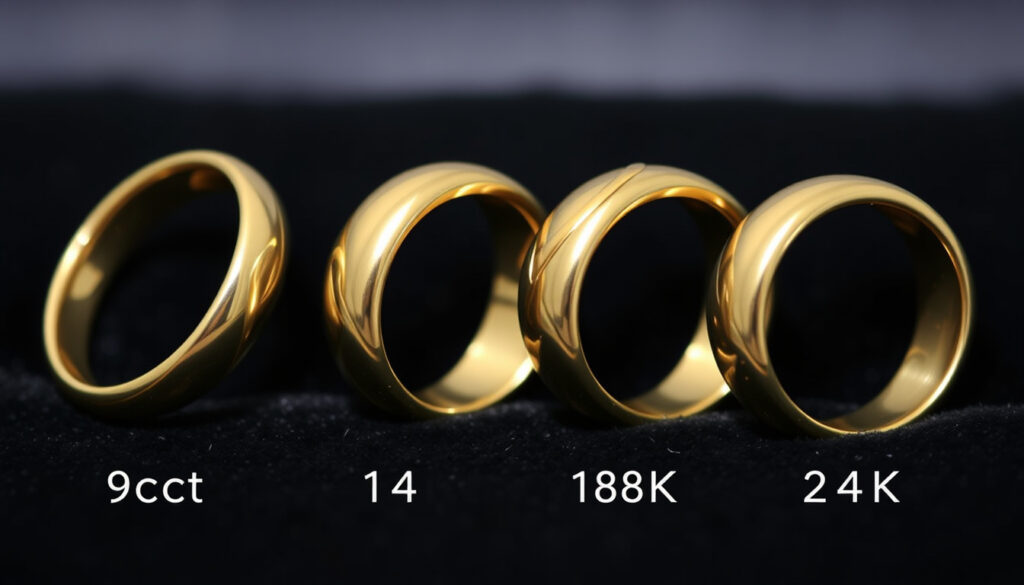
Ring Gold: Which Karat Is Best for Your Ring? (9ct, 14K, 18K, 24K)
If you’re shopping for a gold ring in Ireland, the choice between 9ct, 14K, and 18K can feel like a puzzle, as each karat carries different trade-offs for durability, value, and everyday wear. This guide breaks down what each purity level actually means for your ring’s lifespan and your wallet, drawing on current Irish market prices and expert insights.
Gold spot price per gram (Apr 2026): €131 (Martin Gear Jewellers) ·
9ct gold purity: 37.5% (Martin Gear Jewellers) ·
14K gold purity: 58.5% (Lebrusan Studio) ·
24K gold purity: 99.9% (Pragnell) ·
Most recommended karat for daily wear rings: 14K
Quick snapshot
- 24K gold is too soft for ring settings with stones (Pragnell (British luxury jeweller))
- 14K gold is the most recommended for daily wear rings (Lebrusan Studio (ethical jewellery specialist))
- 9ct gold is the best-selling karat in Ireland for rings (Martin Gear Jewellers (Irish jewellery retailer))
- Whether 22K gold rings will become more popular in Western markets
- Exact percentage of Irish buyers who choose gold plated over solid gold
- Long-term durability of new low-karat alloys marketed as “hypoallergenic”
- Whether lower-karat gold always improves durability (some alloys may be brittle)
- Gold in Ireland traded near €131/gram as of April 2026 (Martin Gear Jewellers)
- 14K will remain the industry standard for engagement rings (Lebrusan Studio)
- Demand for 9ct gold in Ireland likely to hold due to affordability (Lebrusan Studio)
Key facts about gold ring karats are summed up below.
| Label | Value |
|---|---|
| Gold spot price per gram (approx) | €131 (Martin Gear Jewellers) |
| 9ct gold scrap price per gram | ~€27 (estimated from market rates) |
| Average Irish engagement ring weight (gold only) | 3-5g in 14K |
| Most popular gold karat for ring sales in Ireland | 9ct (37.5%) (Martin Gear Jewellers) |
| Durability ranking (1=softest, 5=hardest) | 24K: 1, 18K: 2, 14K: 4, 10K: 5 |
| 24K gold purity | 99.9% (Pragnell) |
| 14K gold purity | 58.5% (Martin Gear Jewellers) |
| 18K gold purity | 75% (Martin Gear Jewellers) |
| 9ct gold purity | 37.5% (Martin Gear Jewellers) |
| 9K gold minimum legal standard in UK | Yes (DSF Antique Jewelry (hallmark guide)) |
How many carat gold is best for a ring?
Durability by karat: 10K, 14K, 18K, 24K
- 10K (41.7% gold): Most durable and budget-friendly, but paler colour.
- 14K (58.5% gold): Industry standard for rings – strong enough for daily wear and holds stones securely (Lebrusan Studio).
- 18K (75% gold): Richer colour but softer; better for occasional wear or heirloom pieces (Lebrusan Studio).
- 24K (99.9% gold): Pure gold – too soft for prongs and bends easily under pressure (Pragnell).
Best karat for daily wear vs special occasion
For a ring worn every day, especially an engagement or wedding band, 14K strikes the best balance. It resists scratches and holds its shape while still containing enough gold to satisfy buyers who want that warm yellow look. 9ct gold is also tough – Lebrusan Studio notes it is “still tough enough to survive a lifetime of wear” – but it contains less gold and may appear paler. 18K is best reserved for rings that don’t face daily knocks, such as cocktail rings or special-occasion bands.
Choosing a karat isn’t just about purity – it determines how long your ring will look good. A 24K band that gets knocked against a desk may bend out of round within months.
The implication: for most Irish ring buyers, 14K offers the best compromise between beauty and resilience.
Is a 24k gold ring worth it?
Value retention of 24K vs 18K
Pure 24K gold trades very close to the spot price, so its resale value is predictable. Mozeris Fine Antiques notes that 24K gold commands a lower resale premium than 22K in many markets, meaning you’re unlikely to lose much on the metal value. 18K, by contrast, has a higher premium at purchase but also retains a higher absolute gold content – about 75% pure – so in a rising gold market it holds real value.
When 24K makes sense: investment vs adornment
If your primary goal is owning gold as an investment, a 24K coin or bar makes more sense than a ring. As DSF Antique Jewelry (hallmark guide) explains, jewellers avoid 24K for setting stones because the metal is too soft to hold them firmly. For a ring that you plan to wear, 24K introduces real risk of deformation and loss of stones. The trade-off is clear: buy 24K for pure gold exposure, but don’t expect it to look perfect after a year of daily wear.
Bottom line: 24K rings are investment pieces best worn on special occasions. For any Irish buyer planning daily use, 14K or 18K delivers far better durability while still offering strong value retention.
The catch: what you gain in gold content you lose in wear-and-tear resistance.
Why don’t jewellers use 24K gold?
Metal softness and structural limits
Pure gold is one of the most malleable metals. Pragnell states that 24K gold is typically marked ‘999’ indicating 99.9% purity, and at that purity it bends easily. That makes it unsuitable for delicate ring bands, especially those with prongs or intricate detailing.
Alloying for strength: 14K and 18K
By mixing gold with copper, silver, or nickel, jewellers create alloys that are far harder. Lebrusan Studio notes that 9ct gold is tougher in hardness than 18ct, but also more brittle, while 14K sits in a sweet spot of good hardness without brittleness. That’s why 14K is the standard for engagement rings globally.
Irish market preference for 9ct and 14K
In Ireland, Martin Gear Jewellers reports that 9k, 14k, and 18k are the most commonly seen karats in jewellery. 9ct dominates price-conscious buyers because it offers the look of gold at a lower cost, while 14K is chosen by those who want a lifetime piece.
The pattern: jewellers avoid 24K because it would require frequent repairs. The industry has settled on 14K and 18K as the reliable workhorses.
What this means: Irish ring buyers get a broad choice that balances cost and lifespan.
Which is better to buy, 22K or 24K gold?
Purity vs durability table
Two close karats, but one key difference in wearability.
| Karat | Purity | Durability for rings | Best use case |
|---|---|---|---|
| 22K | 91.6% | Moderate – better than 24K but still soft | Occasional wear, special ceremonies |
| 24K | 99.9% | Low – scratches and bends easily | Bullion, investment, very rare ring use |
| 18K | 75% | Good – holds stones well | Fine jewellery, heirloom pieces |
| 14K | 58.5% | High – best for daily wear | Engagement and wedding rings |
Investment perspective: liquidity and premium
Mozeris Fine Antiques explains that 22K rings are more wear-resistant than 24K, making them a better choice for a ring that will be worn occasionally. From an investment standpoint, 24K gold commands near-spot prices on resale but carries no manufacturing premium. 22K gold, being slightly less pure, often sells with a small premium for craftsmanship, but its liquidity is slightly lower.
Ring use case: 22K for occasional wear, 24K for bullion
If you’re buying a ring to wear at weddings or cultural events, 22K offers a good balance of high purity and moderate strength. For straightforward gold investment, a 24K coin or bar is more liquid and has no design risk. For an Irish buyer, the choice is simple: want a ring that lasts – go 14K or 18K. Want the highest gold content – buy bullion, not a ring.
Many Irish buyers are drawn to high-purity 22K or 24K rings for their gold content, but the softer metal means the ring will show wear faster than a 14K band. If you plan to wear it daily, that “pure gold” decision may cost you in repairs.
The implication: the investment case for high-karat rings weakens the moment you wear them daily.
What is the gold ring everyone is wearing?
Trending styles: wishbone, signet, stackable bands
While no single style dominates, certain designs have gained traction. Wishbone rings – curved bands that don’t fully encircle the finger – have seen rising interest in Ireland, reflected in search queries. Signet rings are being adopted as unisex accessories, and stackable plain gold bands allow wearers to mix karats and textures.
Irish gold ring trends 2025
Martin Gear Jewellers notes that 9ct gold is the most common choice in Ireland, and this drives much of the market. Affordable 9ct stackable rings have become everyday staples, while 14K and 18K are reserved for engagement and milestone pieces. The trend toward minimal, slim bands suits the durability of lower-karat gold.
Celebrity and social media influence
Celebrity endorsements and Pinterest boards have boosted interest in gold rings, but the practical driver remains price. Irish buyers increasingly search for “wishbone ring gold meaning”, indicating curiosity about style symbolism. However, the underlying factor is cost: 9ct gold allows a stylish look without a five-figure price tag.
The pattern: what’s trending is shaped as much by affordability as by aesthetics.
How much is a 9ct gold ring worth?
Scrap gold valuation for 9ct rings
A 9ct gold ring’s scrap value is determined by its weight, purity, and the current gold spot price. Martin Gear Jewellers explains that a 9k gold ring weighing 5 grams contains about 1.875 grams of pure gold. At a spot price of €131/gram, that pure gold content is worth about €245. A scrap gold buyer typically pays 70-85% of that, so around €170-€208.
Retail price vs scrap value
Irish retailers sell 9ct rings at 2-5 times scrap value, covering design, labour, and markup. A simple 9ct band might retail for €300-€500, while a more ornate style could cost €700 or more. Lebrusan Studio notes that 9ct gold, though lower in purity, is tough enough for a lifetime of wear, so you’re paying for durability as well as metal.
Factors that add value: brand, design, stones
Brand reputation, designer hallmarks, and the presence of gemstones increase the retail price well above scrap. When selling a 9ct ring, you’ll get scrap value unless the piece has collectable provenance. For an Irish seller, checking current scrap rates before taking a ring to a buyer is essential – Mozeris Fine Antiques provides the formula: weight × purity × spot price × payout percentage.
The catch: that retail markup means you’ll never recoup the full purchase price at resale.
Confirmed facts vs what’s unclear
Confirmed facts
- 24K gold is too soft for ring settings with stones (Pragnell)
- 14K gold is most recommended for daily wear rings (Lebrusan Studio)
- 9ct gold is the best-selling karat in Ireland for rings (Martin Gear Jewellers)
What’s unclear
- Whether 22K gold rings will become more popular in Western markets
- Exact percentage of Irish buyers who choose gold plated over solid gold
- Long-term durability of new low-karat alloys marketed as “hypoallergenic”
- Whether lower-karat gold always improves durability (some alloys may be brittle)
What experts say about gold rings
“Pure gold (24K) is typically marked ’24K’ or ‘999’, indicating 99.9% pure gold. It is too soft for most jewellery applications, especially settings that require secure stone settings.”
Pragnell (British luxury jeweller)
“In Ireland, 9k, 14k, and 18k gold are the most commonly seen karats in jewellery. A 9k gold ring weighing 5 grams contains about 1.875 grams of pure gold.”
Martin Gear Jewellers (Irish jewellery retailer)
“9ct gold is tougher in hardness terms than 18ct gold, but also more brittle. It is still tough enough to survive a lifetime of wear.”
Lebrusan Studio (ethical jewellery specialist)
“Gold Value = weight × purity × current spot price × buyer payout percentage.”
Mozeris Fine Antiques (antique jewellery specialists)
For Irish ring buyers, the advice is consistent: choose the karat that fits your wearing habits. Daily wearers should pick 14K or 9ct for durability. Investment-minded buyers are better off with bullion. And if you really want a 24K ring, treat it as an occasional piece – not a daily companion.
goldeneaglecoin.com, irishshop.com, dsfantiquejewelry.com, sellgoldsydney.com, myirishjeweler.com, shayn.in, goldcalc.com, etsy.com
For a more detailed breakdown of current prices per gram, see this detailed karat price guide for gold rings.
Frequently asked questions
What does 9ct gold mean?
9ct gold, also written 9K, means the metal is 37.5% pure gold, with the rest being alloy metals. It is the minimum legal standard for gold jewellery in the UK and Ireland. DSF Antique Jewelry (hallmark guide) explains it as more affordable and durable than higher karats.
Can I wear a 24K gold ring every day?
It’s not recommended. 24K gold (99.9% pure) is very soft and will scratch, bend, or even deform under daily pressure. Pragnell notes that 24K is too soft for prongs and thin bands.
How many grams is a typical gold ring?
A simple women’s gold band weighs 2-4 grams; a men’s band can be 5-8 grams. Irish engagement rings in 14K typically fall between 3-5 grams of gold content.
What is the difference between gold plated and solid gold?
Gold plated items have a thin layer of gold over a base metal (e.g., brass). Solid gold rings are made entirely of gold alloy (e.g., 9ct, 14K). Plated rings will wear off over time, while solid gold can be polished and last for decades.
Is a 2 carat diamond ring too flashy?
“Carat” refers to diamond weight, not gold purity. A 2-carat diamond ring is noticeable but depends on setting and style. Many Irish buyers prefer 0.5-1 carat for everyday wear to balance presence and practicality.
What is the 3 ring rule for weddings?
The 3 ring rule refers to the engagement ring, wedding band, and often a push or eternity ring. It’s a tradition in Ireland and elsewhere, though many couples choose just two rings. The rule is more about style than law.
Which metal is called poor man’s gold?
“Poor man’s gold” typically refers to brass or gold plated metals. In the ring world, lower-karat gold like 9ct is sometimes called that derisively, but it offers genuine gold content and good durability at a lower price point. DSF Antique Jewelry (hallmark guide) notes 9ct is the minimum legal standard – far from worthless.
More related posts
 Marilyn Monroe Cause of Death: Suicide or Murder
 The Pizza Edition – Specs, Comparisons and Facts
 Narcissistic Traits: 5 Main Signs and Red Flags
 Furniture Outlet Dandenong: Location, Hours, Deals & Reviews
 Martin Lawrence: Health, Allegations, and Friendship
 Andrew Symonds: Australian Cricket Legend’s Death & Controversies
 Kriti Sanon relationship, marriage, smoking latest
 Darren Lockyer: Biography, Voice, Net Worth, Retirement & More
