Gold Necklace Guide: Cost, Trends, and Buying Tips
Choosing a gold necklace often means balancing the draw of pure gold against the practical need for something that won’t bend or break. With 24k being the softest and most brilliant, while 14k and 18k alloys offer everyday toughness, the real question is whether you’re buying for style, investment, or both. This guide breaks down the costs, trends, and long-term value so you can decide what fits your wrist — and your wallet.
Pure gold karat: 24k · Common necklace karats: 14k, 18k, 24k · Typical necklace weight range: 2g – 20g
Quick snapshot
- 24k gold is about 99.9% pure (Solid Gold Hub, jewelry education portal)
- 14k gold contains roughly 58.3% gold (deepreport.uk, buying guide)
- Gold is measured in karats (24k = 99.9% gold) (Solid Gold Hub, jewelry education portal)
- Future gold spot prices are unpredictable
- Specific 2026 jewelry trends are speculative
- Resale value of fashion pieces depends on brand demand
- 2024: Rise of layered chain necklaces
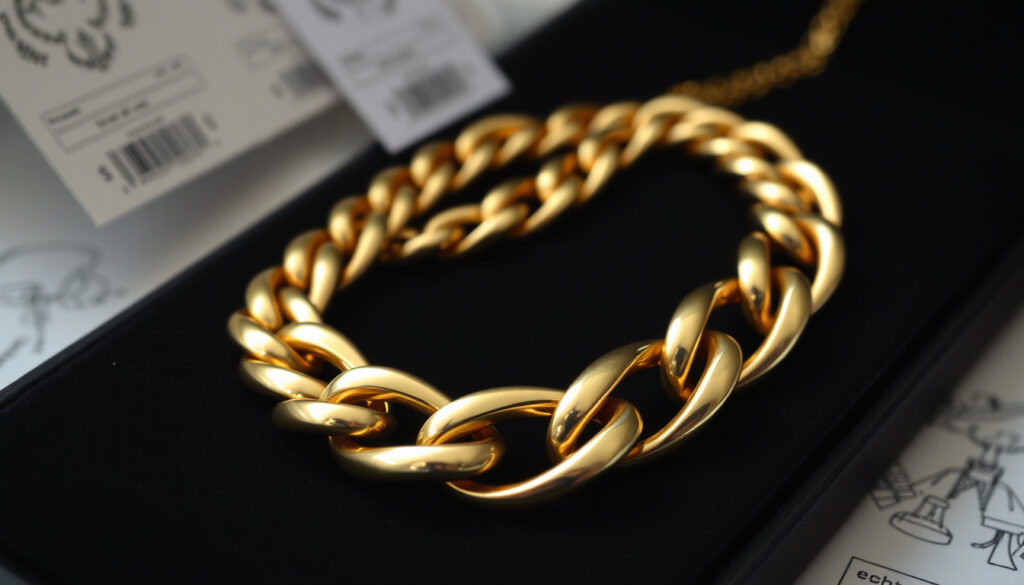
- 2025: Chunky gold chain revival
- 2026: Predicted return of gold chokers and coin pendants
- Expect more personalized pendants and mixed-metal styles
- Investment buyers may shift toward 24k bullion pieces
- Everyday wear tends to favor 14k and 18k chains
Four key facts about gold necklaces, one pattern: karat determines both look and longevity.
| Label | Value |
|---|---|
| Gold purity measure | Karats (24k = 99.9% gold) |
| Common necklace karats | 14k, 18k, 24k |
| Typical necklace weight | 2–20 grams |
| Average price per gram (14k) | $35–$55 (varies with market) |
How much should a real gold necklace cost?
The price of a gold necklace depends on three factors: karat purity, weight in grams, and the current spot price of gold. To calculate the raw metal value, you multiply the spot price by the gold fraction and then by the necklace’s weight (Honho Jewelry, gold retailer).
How much is a 5 gram gold necklace worth?
- 14k (58.5% gold): 5g × 0.585 × spot price per gram. At a spot price of $55/g, the raw gold value is about $160.
- 18k (75% gold): 5g × 0.75 × $55 ≈ $206.
- 24k (99.9% gold): 5g × 0.999 × $55 ≈ $275.
These numbers are the base metal value. Retail prices add a maker’s markup and labor — typically 20–50% for standard designs (Solid Gold Hub, jewelry education portal). A 14k chain might sell for $300–$500, while an 18k chain could run $600–$1,800 (Honho Jewelry).
The pattern: lower karat gold costs less upfront and wears better daily, but higher karat gold recovers more of its value on resale.
What necklaces are trendy right now?
Current trends favor layered chains, chunky links, and personalized pendants. Influencer and celebrity styles drive demand, especially for minimalist gold chains that work for both men and women (deepreport.uk, buying guide).
What is the most popular necklace in 2026?
Predictions point to a return of gold chokers and coin pendants, extending the 2025 chunky chain revival. However, trend forecasts are speculative — the safe bet is a classic curb or figaro chain in 14k or 18k.
What is the necklace everyone is wearing?
In 2024–2025, layered chain necklaces became a staple, with multiple thin chains worn together. This style remains strong heading into 2026.
Trendy designs often lose resale value faster than timeless chains. A classic rope or cable chain in 14k holds both style and metal value.
The implication: buyers who prioritize long-term value over short-term fashion should default to classic chain styles.
Is it worth buying a gold necklace?
Gold necklaces retain intrinsic metal value, but fashion pieces may lose resale value due to design and brand. A simple chain can be melted down for its gold content, while a branded designer piece might fetch a premium only if the brand stays desirable (Solid Gold Hub).
Do gold chains hold value?
Yes — the gold itself holds value. But the retail markup you pay upfront is rarely recovered. The best value retention comes from buying close to the spot price, i.e., weight-based jewelry rather than heavily branded designs.
A 24k gold necklace may be too soft for daily wear, but its metal value is nearly 100% recoverable. For everyday use, 14k or 18k is smarter — but you’ll lose the maker’s markup on resale.
The catch: the same softness that makes 24k gold a poor daily wearer makes it the best candidate for value recovery.
Do gold chains hold value?
Gold price history shows long-term appreciation, though short-term drops occur. Physical gold jewelry offers a hedge against inflation, but the resale value depends on the buyer’s willingness to pay for craftsmanship (Goodreturns, financial news platform).
Should I buy gold now or wait 2026?
Economic and market factors influence short-term prices. In India, 24k gold ranged from ₹13,489 to ₹14,302 per gram in mid-2026 (Angel One, investment platform). Waiting for a dip could save money, but no one can predict the bottom. The best strategy is to buy when you find a piece you love at a fair price.
Is it okay to wear a gold necklace every day?
Yes, but the karat matters. Higher karat gold (24k) is softer and scratches easily. 14k and 18k alloys are more durable for everyday use (deepreport.uk).
What is the best gold chain to buy for daily wear?
For durability, a 14k or 18k machine-made chain like a cable, rope, or curb is ideal. Avoid delicate hollow links and opt for solid construction. Proper care — remove during sports, avoid chlorine — extends life.
Comparison of three popular karats for gold necklaces:
| Attribute | 14k Gold | 18k Gold | 24k Gold |
|---|---|---|---|
| Gold purity | 58.5% | 75% | 99.9% |
| Durability | Excellent for daily wear | Good for regular wear | Soft, scratches easily |
| Color | Pale yellow | Rich yellow | Deep, bright yellow |
| Typical price per gram (retail) | $35–$55 | $50–$80 | $70–$110 |
| Best use | Everyday necklaces | Fine jewelry, special occasions | Investment, display pieces |
| Resale value recovery | Moderate (lose markup) | Moderate | High (close to spot) |
The pattern: karat choice is a trade-off between wearability and value retention — the right pick depends on whether the chain will see daily use or mostly stay in a drawer.
Specifications at a glance
Six key specs that define a gold necklace’s value and wearability.
| Specification | Details |
|---|---|
| Karat options | 10k, 14k, 18k, 22k, 24k |
| Common necklace weights | Men: 5–20g; Women: 2–10g |
| Typical chain lengths | 16–24 inches |
| Clasp types | Lobster, spring ring, box clasp |
| Construction | Solid (most durable) vs. hollow (lighter, less durable) |
| Hallmark requirement | Yes, in many countries (e.g., 14k = 585, 18k = 750) |
Pros and Cons of buying a gold necklace
Upsides
- Intrinsic value — gold is a tangible asset
- Long-lasting with proper care
- Can be an heirloom piece
- Hedge against inflation
Downsides
- Retail markup reduces resale value
- Higher karat gold is soft and prone to damage
- Fashion styles may go out of trend
- Requires cleaning and maintenance
Timeline: Gold necklace trends
- 2024: Rise of layered chain necklaces — multiple thin chains become a staple.
- 2025: Chunky gold chain revival — bold links gain popularity.
- 2026: Predicted return of gold chokers and coin pendants, continuing the trend toward statement pieces.
What we know and what remains unclear
Confirmed facts
- 24k gold is pure gold (Solid Gold Hub, jewelry education portal)
- Gold is a precious metal with intrinsic value
- Gold is measured in karats
What’s unclear
- Future gold spot prices are unpredictable
- Specific 2026 jewelry trends are speculative
- Resale value of fashion pieces depends on brand demand
Expert perspectives
“24K gold is the purest common jewelry gold standard at about 99.9% purity and is positioned as the best fit for investors rather than everyday necklaces.”
— Solid Gold Hub, jewelry education portal
“The raw gold value equals spot price times gold fraction times necklace weight.”
— Honho Jewelry, gold retailer
“14K gold contains roughly 58.3% gold and is commonly recommended for durability in necklaces.”
— deepreport.uk, buying guide
For buyers in markets like India, the price gap between karats is especially wide. On July 25, 2026, 24k gold was reported at ₹14,235 per gram, while 22k was ₹13,039 per gram (ClearTax, tax and investment platform). Such regional variation underscores the need to check live rates before buying. For guidance on choosing quality pieces across product categories, see the Women’s Cardigan Ireland Guide for a similar approach to evaluating materials and value.
The pattern: Gold’s intrinsic value is stable, but the jewelry markup and craftsmanship premium are a gamble. For the everyday wearer in the U.S. or Europe, a 14k chain is the practical choice. For the Indian investor, 24k bullion pieces offer better value retention. The choice is clear: decide whether you’re buying to wear or to hold, and let that guide your karat and budget.
groww.in, moneycontrol.com, exchange-rates.org, brinkersjewelers.com, 5paisa.com, jandmjewelry.com, goldzenn.com
Frequently asked questions
What gold chain type is best for a first-time buyer?
A 14k solid cable or curb chain offers durability, affordability, and versatility. For those focused on metal value, 24k chains hold the most gold content but require careful handling.
How do gold price trends affect timing for buyers?
Gold prices fluctuate with market conditions. Long-term appreciation is common, but short-term dips are possible. Buying at a fair price when you find a piece you love is the most reliable approach.
How does necklace weight affect the cost of a gold chain?
Weight directly determines metal value. A 5g chain in 14k at $55/g spot holds roughly $160 in gold, while a 10g chain doubles that. Retail prices include markup on top of the base metal cost.
Which gold necklace styles are most popular across age groups?
Layered chain necklaces dominated 2024–2025, appealing to younger buyers. Chunky gold chains gained traction in 2025–2026 across a wider age range, while classic curb and figaro chains remain timeless choices for all demographics.
What specific necklace styles are predicted for 2026?
Gold chokers and coin pendants are expected to lead trends in 2026, continuing the shift toward statement pieces. Classic chains in 14k or 18k remain safe bets regardless of trend cycles.
More related posts
 English to French: Accurate Translations, Slang & Common Mistakes
 Prince Philip: Life, Love, and Legacy – Full Biography
 Belal Muhammad: UFC Champion, Ethnicity, Record & Career
 Isuzu MUX Guide: Problems, Model Years & Class Action
 Lauren Sánchez: Biography, Wedding, and Public Scrutiny
 H.P. Lovecraft: Master of Cosmic Horror and Controversy
 Liverpool F.C. vs Everton F.C. Timeline: Key Moments & Results
 Apple TV+ – 2025 Prices, Shows and Subscription Guide
