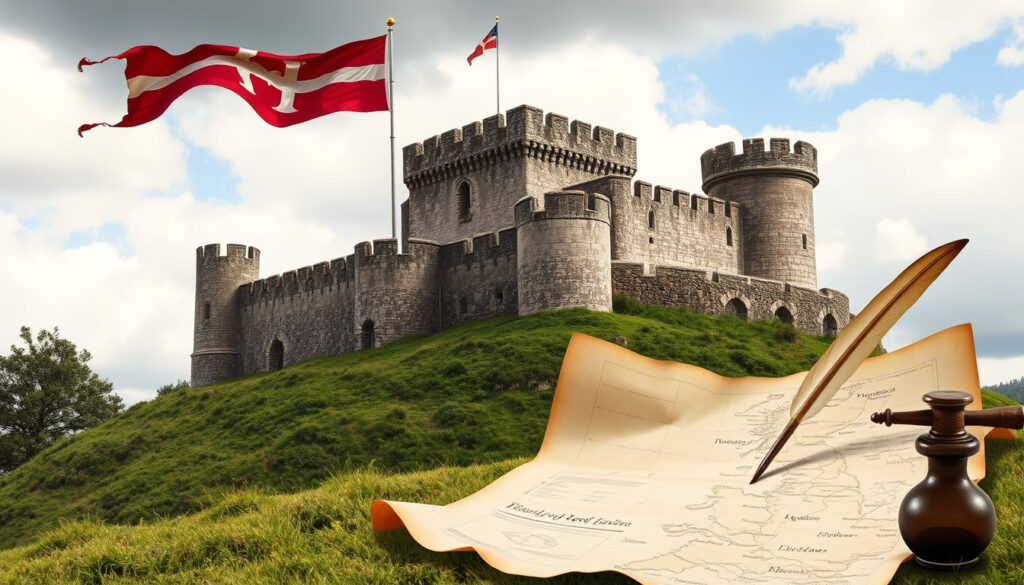
William the Conqueror: Biography, Conquest & Accuracy
Few figures from medieval history stir as much curiosity as William the Conqueror—a Norman duke who crossed the English Channel in 1066 and changed a kingdom forever. His story is one of ambition, violence, and a surprisingly modern administrative mind.
Born: c. 1028, Falaise, Normandy ·
Reign as King of England: 1066–1087 ·
Key Battle: Battle of Hastings (1066) ·
Death: 9 September 1087, Rouen, Normandy
Quick snapshot
- William was crowned King of England on 25 December 1066 at Westminster Abbey (Wikipedia).
- He commissioned the Domesday Book in 1086 (World History Encyclopedia).
- William died on 9 September 1087 at the Priory of Saint Gervase, Rouen (World History Encyclopedia).
- The exact wording of William’s deathbed confession is disputed; the only surviving account comes from Orderic Vitalis.
- Details of his early childhood in Falaise remain fragmentary (World History Encyclopedia).
- Specific motivations behind certain political decisions, such as the Harrying of the North, are inferred but not recorded directly (English monarchs animated history (YouTube)).
- c. 1028 – Born in Falaise, Normandy (World History Encyclopedia).
- 1035 – Becomes Duke of Normandy after father’s death (World History Encyclopedia).
- 1066 – Invades England, wins Battle of Hastings, crowned king (Wikipedia).
- 1086 – Commission of the Domesday Book (World History Encyclopedia).
- 1087 – Dies in Rouen, buried at Saint-Étienne de Caen (Wikipedia).
- Historians continue to debate the brutality of William’s “Harrying of the North” (English monarchs animated history (YouTube)).
- The TV series King and Conqueror has renewed public interest; future episodes may prompt further scholarly correction. (English monarchs animated history (YouTube))
Eight key facts about William I, drawn from contemporary and near-contemporary sources, show the shape of his life and reign.
| Attribute | Detail |
|---|---|
| Full Name | William I of England (William the Conqueror) |
| Title | Duke of Normandy, King of England |
| Born | c. 1028, Falaise, Normandy |
| Died | 9 September 1087, Rouen, Normandy |
| Spouse | Matilda of Flanders (m. 1051/52) |
| Children | Robert Curthose, William II, Henry I, Adela, and others |
| Reign | 1066–1087 |
| Burial | Abbey of Saint-Étienne, Caen |
What is William the Conqueror most known for?
Norman Conquest of England
- William claimed the English throne after the death of Edward the Confessor in 1066 (EBSCO Research Starters (biography database)).
- The ensuing invasion, known as the Norman Conquest, replaced the Anglo-Saxon elite with a Norman nobility (Wikipedia).
- William used force, politics, and bribery to secure his position after 1066 (English monarchs animated history (YouTube)).
Battle of Hastings
- William defeated Harold Godwinson at the Battle of Hastings on 14 October 1066 (Wikipedia).
- The battle was decisive; Harold died, and William advanced to London for his coronation (World History Encyclopedia).
Domesday Book
- In 1086 William ordered a comprehensive survey of landholdings across England, now called the Domesday Book (World History Encyclopedia (historical encyclopedia)).
- It remains one of the most valuable administrative records from medieval Europe (English monarchs animated history (YouTube)).
William’s Domesday Book gave him an unprecedented tool for taxation and control. For any ruler, knowing exactly what every subject owns is power—and no English king before him attempted it.
Was William the Conqueror a Viking?
Norman ancestry and Viking roots
- The Normans were originally Norse settlers (Vikings) who were granted land in northern France in the 10th century (World History Encyclopedia).
- William was a descendant of Rollo, the Viking leader who founded the Duchy of Normandy (Wikipedia).
Cultural identity of the Normans
- By William’s time, the Normans spoke French, practiced Christianity, and followed Frankish customs (World History Encyclopedia).
- Their Viking ancestry was genealogical, not cultural—they had assimilated fully into French society (Wikipedia).
Calling William a “Viking” is technically true by bloodline but misleading in practice. He was a French-speaking Christian duke, not a raiding pagan. The label sticks because “Viking” sounds more dramatic than “French duke.”
What did William the Conqueror say on his deathbed?
Accounts of William’s final words
- The main account comes from the chronicler Orderic Vitalis, writing decades after the event.
- William reportedly confessed his sins, including the violence of the conquest, and distributed his lands: England to William II and Normandy to Robert Curthose (Wikipedia).
- Exact phrasing is lost; Orderic’s version is the closest we have.
Historical sources on his death
- William died on 9 September 1087 at the Priory of Saint Gervase in Rouen after a brief illness (World History Encyclopedia).
- His burial at Saint-Étienne de Caen was disrupted by a fire and an angry citizen who claimed the land was stolen (Wikipedia).
Orderic Vitalis was a monk with his own biases—his account of William’s repentant death may have been shaped to deliver a moral lesson. The real deathbed may have been less poetic.
How accurate is King and Conqueror?
Historical liberties in the series
- The BBC/Amazon series King and Conqueror dramatizes relationships and timelines for narrative effect (Wikipedia).
- Characters like Harold Godwinson’s brother Tostig are given expanded roles to build conflict.
Factual basis for key events
- The major battles—Stamford Bridge, Hastings—are real and chronologically correct.
- William’s claim to the throne via Edward the Confessor is historical, though the show glosses over legal complexities.
- The depiction of Matilda as a reluctant wife to William takes creative license; contemporary sources suggest a politically strategic marriage.
For viewers, King and Conqueror is entertainment, not a documentary. The skeleton is real, but the flesh—dialogue, motives, private moments—is invented. Enjoy it, but don’t cite it in a history paper.
What happened to William’s wife Matilda on 11 May 1068?
Matilda’s coronation as Queen of England
- Matilda of Flanders was crowned Queen of England on 11 May 1068 at Westminster Abbey (Wikipedia).
- The ceremony came nearly 18 months after William’s own coronation, likely because of ongoing rebellions.
Her role in William’s reign
- Matilda ruled Normandy as regent when William was in England, showing she was a capable political partner (Wikipedia).
- She bore William at least nine children and helped secure the dynasty’s continuity.
Timeline of William the Conqueror’s life
- – Born in Falaise, Normandy (World History Encyclopedia).
- – Becomes Duke of Normandy after his father Robert’s death (World History Encyclopedia).
- – Marries Matilda of Flanders (Wikipedia).
- – Invades England, wins Battle of Hastings (14 Oct), crowned king (25 Dec) (Wikipedia).
- – Commission of the Domesday Book (World History Encyclopedia).
- – Dies at Priory of Saint Gervase, Rouen; buried at Saint-Étienne de Caen (World History Encyclopedia).
Clarity check: what we know vs. what remains uncertain
Confirmed facts
- William was crowned King of England on 25 December 1066.
- He commissioned the Domesday Book in 1086.
- He died on 9 September 1087.
- He was born in Falaise, Normandy, c. 1028.
What’s unclear
- Exact wording of his deathbed confession.
- Details of his early childhood and education.
- Specific motivations for the Harrying of the North.
- The precise personal dynamics with his eldest son Robert Curthose.
“William was a man of exceptional wisdom and great ambition, but he also had a stern and cruel side that could alarm even his closest followers.”
— Orderic Vitalis, medieval chronicler
“The king [William] was so severe and so harsh that no one dared to oppose him. He imposed heavy taxes and built castles all over England, which the English hated.”
— William of Poitiers, chaplain and biographer
The man who crossed the Channel in 1066 left a kingdom transformed—castles, a new ruling class, and the Domesday Book. For a TV viewer, the drama of King and Conqueror may feel vivid, but the real William was no caricature. He was a calculating, often ruthless duke who used record-keeping as a weapon of control. For anyone studying medieval Europe, the lesson is clear: read the chronicles, watch the show for fun, but never confuse the two.
For a more comprehensive look at his life and rule, readers can refer to this detailed biography of William the Conqueror.
Frequently asked questions
What is William the Conqueror most known for?
He is best known for the Norman Conquest of England in 1066, the Battle of Hastings, and the Domesday Book.
Was William the Conqueror a Viking?
He had Viking ancestry through Rollo, but culturally he was a French-speaking Norman.
What did William the Conqueror say on his deathbed?
According to Orderic Vitalis, he confessed his sins and divided his lands between his sons.
How old was William the Conqueror when he died?
He died on 9 September 1087 at around age 59.
Who succeeded William the Conqueror?
His son William II succeeded him as King of England; another son, Robert Curthose, received Normandy.
Was William the Conqueror a good king?
Historians debate this. He brought stability but also violent repression, especially in the north.
Who was king before William the Conqueror?
Harold Godwinson was king before William, after Edward the Confessor died in 1066.
More related posts
 AUD to LKR: Exchange Rate Today & Converter
 Spider-Man: Beyond the Spider-Verse – Release, Delay & LGBTQ
 Justine Schofield: Relationship, Career & Latest Updates
 Rey Mysterio: Real Name, Height, Age, and Family Facts
 Isuzu MUX Guide: Problems, Model Years & Class Action
 Winston Churchill: Legacy, Controversies, and Family Connections
 Helen Garner: Biography, Controversies, Books, and Diaries (2025)
